

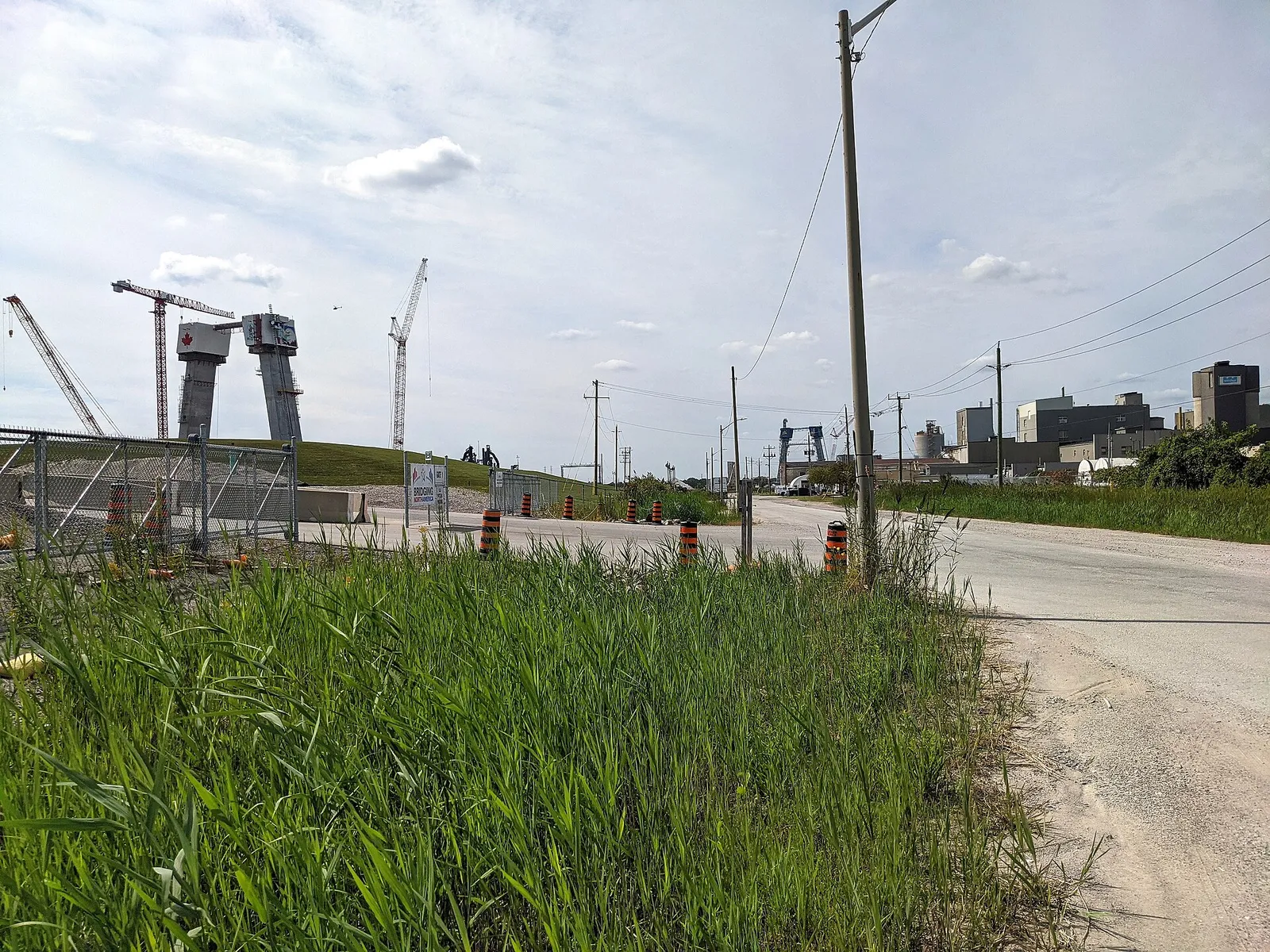
The Gordie Howe International Bridge was supposed to open this month. The ribbon-cutting, set for June 12, was scrubbed at the last minute. Now the six-lane, cable-stayed span sits finished and empty above the Detroit River — a multibillion-dollar piece of infrastructure caught in a cross-border standoff.
A bridge finished, an opening on hold
The Windsor-Detroit Bridge Authority, the Canadian Crown corporation overseeing the project, cited unspecified "outstanding issues" in postponing the opening. Canadian Prime Minister Mark Carney was more direct, telling reporters the delay came "at the request of the United States," and that Canada had agreed to take the time needed to resolve the dispute. He declined to detail what the issues were.
The structure itself has been functionally complete since late 2025. What is missing is permission to open it — and a resolution to President Trump's objections, which his administration says have not changed.
What Trump is demanding
Trump began signaling opposition in February, posting that the United States should "perhaps … own, at least one half of this asset" and that the toll revenues would be "astronomical." He has framed the crossing as part of what he calls unfair treatment by Canada and called for the U.S. to be compensated before it opens. The White House has separately complained that too few American-made materials were used in construction.
What the administration has not done, NPR reported, is spell out in any formal public document the legal mechanism it would use to block the crossing, or what revised arrangement would satisfy it.
Who actually owns it
Trump's ownership demand runs into the terms of the deal that built the bridge. Under a 2012 agreement, the span is jointly owned 50-50 by the Canadian federal government and the state of Michigan, with a binational authority providing oversight. Canada financed the entire $4.7 billion construction cost — work that began in 2018 — and is to be repaid through toll revenues over roughly three decades.
Michigan and Canadian officials across party lines have pushed back on the president's framing. Rep. Debbie Dingell, a Michigan Democrat, said the arrangement is "clearly spelled out" as joint public ownership. Carney has noted that Canadians "paid for the bridge in full" while the U.S. already holds a legal ownership stake — making a demand for a further "cut" of a bridge Michigan co-owns a puzzling one.
The Ambassador Bridge shadow
Hanging over the dispute is the only other crossing between the two cities: the privately owned Ambassador Bridge, controlled by the Moroun family, which stands to benefit if the new public bridge never opens. In January, before Trump's first public threat, Matthew Moroun donated $1 million to a Trump-aligned super PAC.
The fact-checking site Snopes, reviewing the claim of a connection, rated it a "mixture": the delay and the donation are both documented, but a causal link between them remains unproven. The White House has not addressed the timing.
What's at stake
The Windsor-Detroit corridor is the busiest land border crossing in North America, with billions of dollars in auto parts, machinery and raw materials moving across the river each year — many components crossing several times before a finished vehicle rolls off the line. A permanent delay would leave the region reliant on the aging Ambassador Bridge and the Detroit-Windsor Tunnel, with no added redundancy for one of the continent's most critical supply chains.
For now, the lanes are striped, the toll plazas are built, and the bridge waits — for a decision that, so far, only one government is willing to make.