
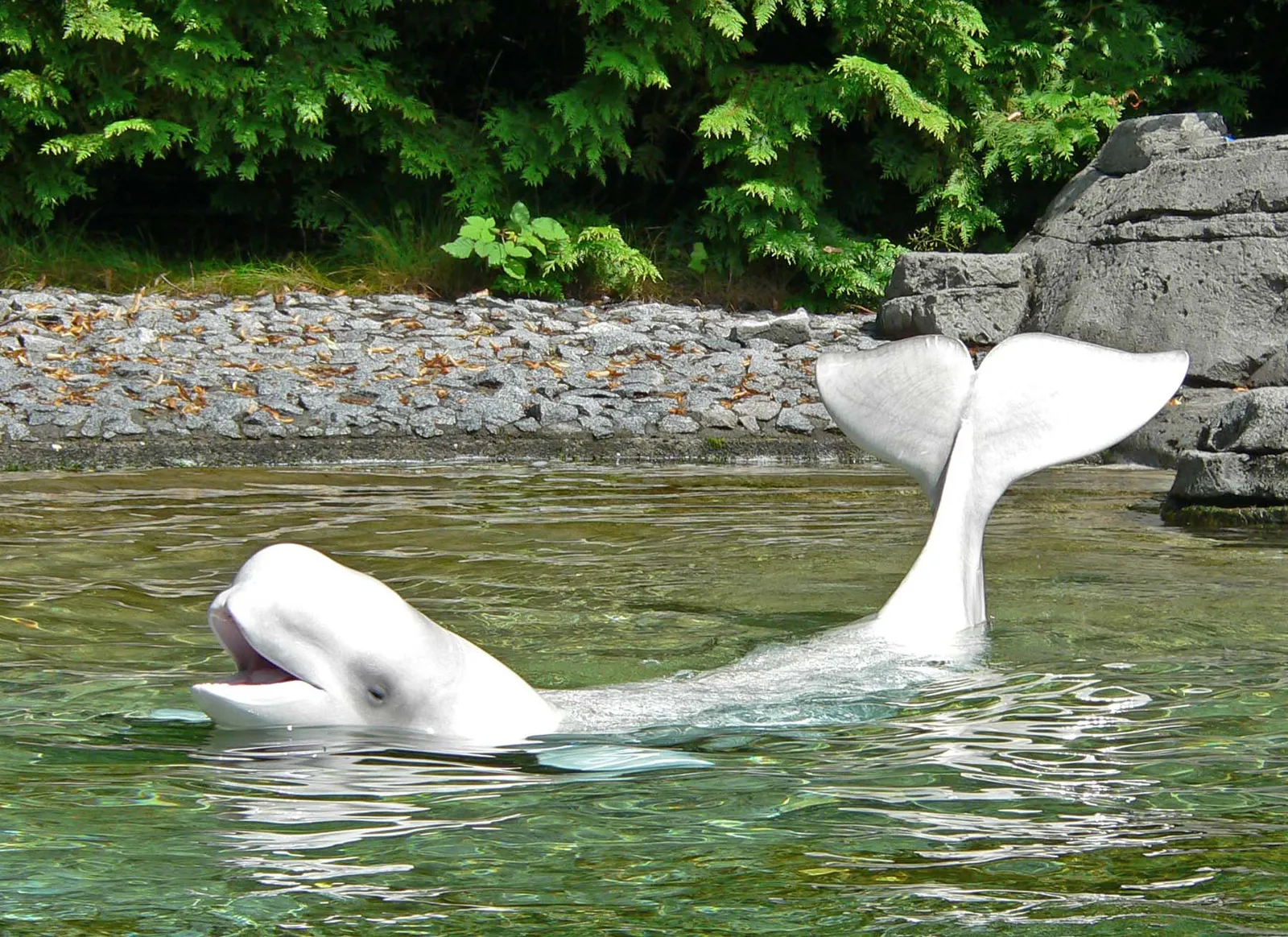
One of the more unusual animal-welfare operations in recent memory is underway: the relocation of 30 beluga whales left behind when a Canadian marine park closed, to a set of aquariums spread across North America and Europe, ABC7 reports.
How the whales got stranded
The belugas were the last major population at Marineland Canada, the marine park in Niagara Falls, Ontario, that closed in September 2024 amid controversy and allegations of animal mistreatment. Closing a park does not solve the problem of the animals inside it, and these whales, which range in age from about 6 to 40 years and include individuals up to 16 feet long, remained on site.
Their care was kept going for a time by donations. But as those funds dwindled, the people looking after them raised an alarm that is stark when stated plainly: without a plan, the animals could face euthanasia. In October 2025 caretakers asked the Canadian government for funding, and by early 2026 a group of aquariums had assembled a rescue plan.
Where they are going
The whales are being distributed among facilities accredited by the Association of Zoos and Aquariums, a detail the organizers stress because accreditation is meant to certify standards of animal care. The receiving institutions are Chicago's Shedd Aquarium, SeaWorld San Antonio, the Georgia Aquarium in Atlanta, SeaWorld San Diego, and the Oceanografic in Valencia, Spain. Mystic Aquarium in Connecticut is assisting with the rescue.
The move began this week. The first six whales departed on Monday, and organizers said that all of the whales in this relocation group had arrived safely at their destinations by Tuesday, carried by teams of veterinarians, aquatic-medicine specialists and the caretakers who had stayed with them.
"Their safety and well-being is our top priority," said Eric Otjen, vice president of zoological operations at SeaWorld San Diego, one of the two California facilities taking whales in.
The debate that travels with them
It would be tidy to call this simply a rescue, and in the immediate sense it is: animals that were running out of options now have somewhere to go. But belugas are precisely the kind of large, intelligent, wide-ranging marine mammal at the center of a long argument over whether such species should be kept in captivity at all. The same movement that pushed for Marineland's practices to end also questions whether moving the whales into other display facilities, rather than a sanctuary, is the right outcome.
That argument is not going to be settled by this operation, and it is fair to hold both thoughts at once: that getting these particular animals out of a shuttered park and into accredited care is a genuine good, and that the larger question of where belugas belong remains open. For the 30 whales themselves, the immediate answer, as of this week, is a tank in a new city, and, according to the people who moved them, a safe arrival.