

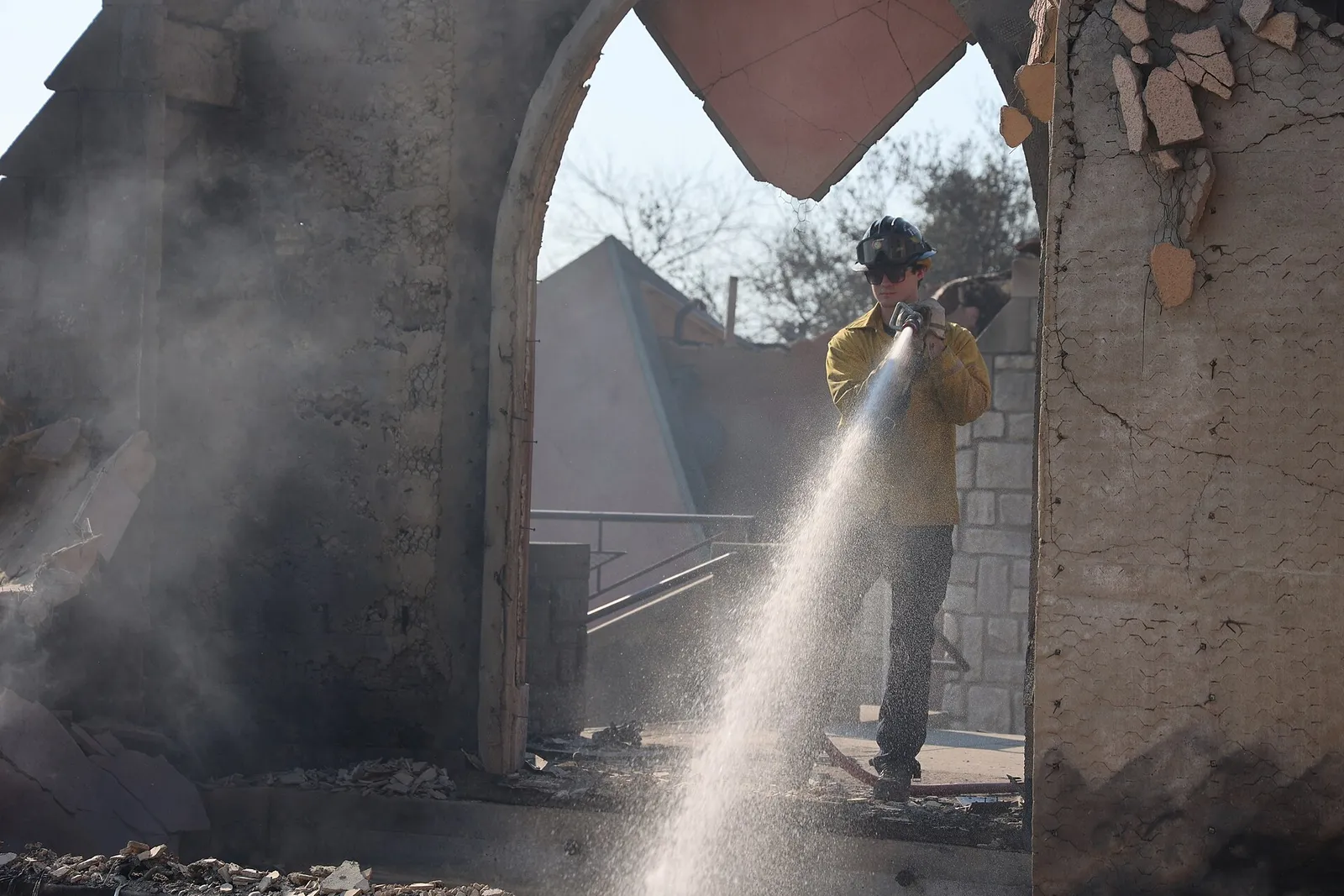
Six months after the Eaton and Palisades fires leveled whole neighborhoods, the rebuilding is running into a question the state never fully settled: when disaster clears the land, who gets to decide what goes back on it? Two bills in the Legislature answer that differently — and the contrast says a lot about California's tangled politics of housing.
The coastal bill: a gate for new buyers
The first, Senate Bill 1229 by Sen. Ben Allen, whose district includes Pacific Palisades, would narrow a shortcut. After a disaster, California has let property owners rebuild along the coast without going through the California Coastal Commission. SB 1229 would keep that fast track for original owners but close it to new buyers — meaning an investor or developer who purchases a burned-out lot would need commission approval before building, CalMatters reported.
The worry behind it is concrete. More than 40% of homes sold in the Palisades last summer went to investors — buyers with names like "LLC," "Inc," or "Homes," according to CalMatters. "It keeps the door open for disaster victims to rebuild their homes without delay, but closes it to speculative developers seeking a profit," said Sen. Maggy Krell, a Sacramento Democrat backing the measure. Notably, the bill is written to apply to future disasters; it would not cover the homes lost in last year's fires.
The Senate passed it 29-9. The lone Democrat to vote no was San Francisco's Scott Wiener, the Legislature's most prominent housing advocate, who objected to treating new owners differently from old ones. "It could set a troubling precedent that we're more focused on only empowering the original owner to build," Wiener said, calling it "a very, very dangerous precedent."
The Altadena bill: a pause on density
The second bill comes at the problem from the opposite direction. Senate Bill 1090, by Sen. Sasha Renée Pérez of Pasadena and co-authored by Assemblymember John Harabedian, would hit pause on two of the state's signature housing-density laws — SB 9, which allows lot splits and duplexes on single-family parcels, and SB 1123, which permits small clusters of homes on some vacant lots — but only in fire-scorched Altadena, and only temporarily. The moratorium would run through Jan. 7, 2030.
Backers, who call it the "Keep Altadena Lands in Altadena Hands Act," argue the unincorporated community needs breathing room before speculators reshape it. The Eaton Fire destroyed 9,418 structures across some 14,921 acres, and hundreds of empty lots now sit exposed to buyers who could subdivide them. "Protecting survivors and connecting our community has been at the forefront of our work," Nic Arnzen, chair of the Altadena Town Council and himself a fire survivor, said in support. The bill cleared Assembly committees on July 1.
The tension underneath
The two measures share an enemy — the outside investor cashing in on catastrophe — but they pull in opposite directions on the state's larger goal of building more housing. SB 1229 adds a review step; SB 1090 suspends laws designed to add homes. That is the knot California keeps hitting: rules written to ease a statewide housing shortage can look very different from inside a neighborhood still deciding what it wants to become. Critics of the Altadena pause warn that freezing density, even briefly, chips at hard-won pro-housing policy. Its defenders answer that a community in the middle of grief and rebuilding deserves a say before the market decides for it.
Neither bill is law yet; both await further votes. However they land, they frame the choice Sacramento faces every time California burns — speed versus control, and survivors versus the market.