

The top American envoy in Taiwan has urged the island to bristle with drones as a way to deter a Chinese attack, invoking a vivid image that has become shorthand for a new theory of Taiwanese defense.
The remarks
Raymond Greene, director of the American Institute in Taiwan — the de facto U.S. embassy in the absence of formal diplomatic ties — told a drone-industry forum that "nothing will deter conflict more effectively than turning Taiwan into a hornet's nest" of air, surface and undersea drones, Al Jazeera reported. He pointed to Ukraine's war against Russia, where cheap drones have helped a smaller force impose heavy costs on a larger one, according to the Taipei Times.
The strategy behind the phrase
The "hornet's nest" idea is a version of what defense planners call asymmetric defense: rather than trying to match China plane-for-plane and ship-for-ship, Taiwan would field large numbers of small, hard-to-destroy, relatively inexpensive systems to make any invasion prohibitively costly. It is a logic Taipei has increasingly embraced, given that its military spending and population — about 23 million — are dwarfed by the mainland's.
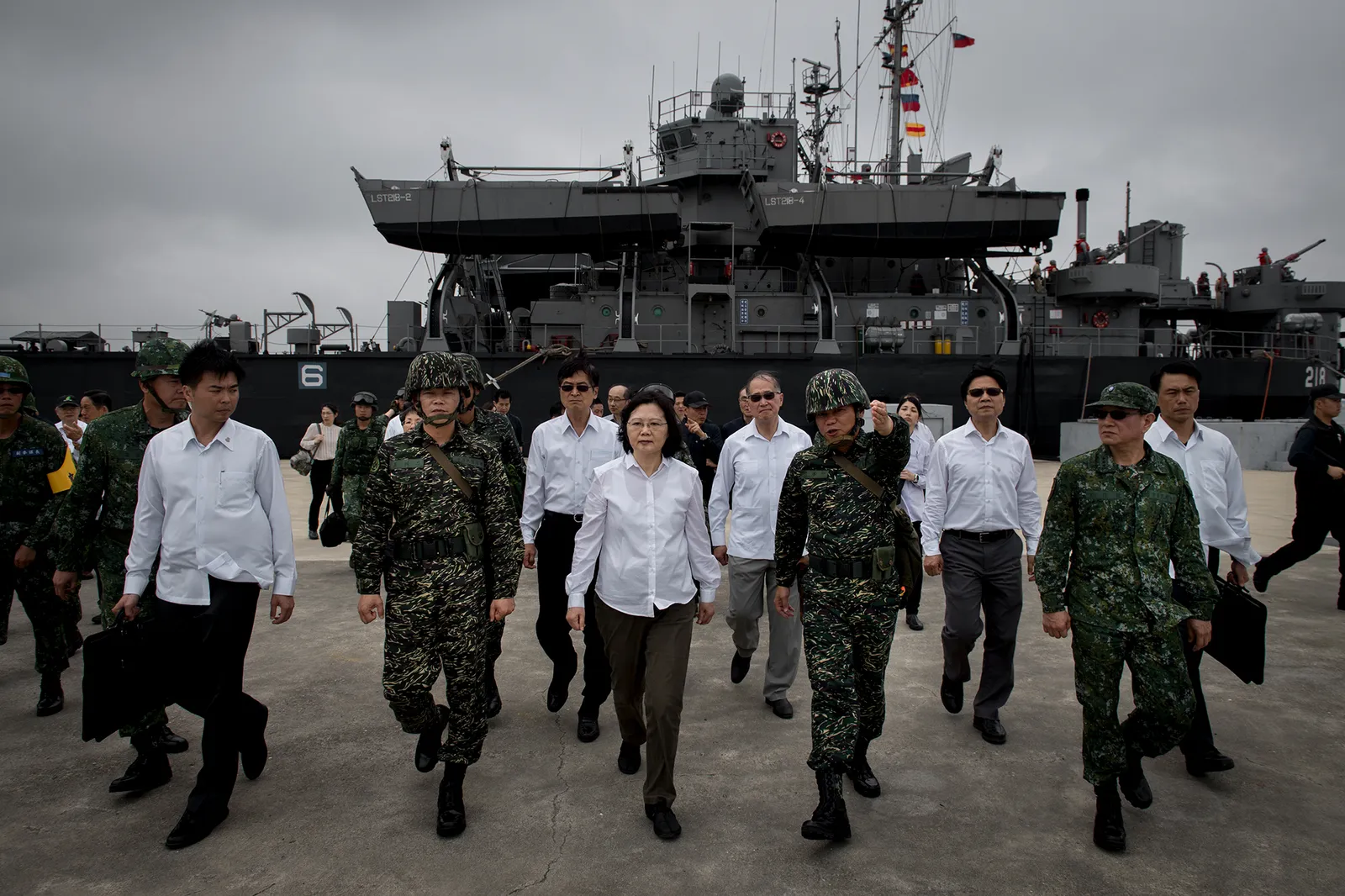
The remarks align with Taiwan's own plans. Its government has advanced a special defense budget worth roughly NT$210 billion (about $6.6 billion) to buy unmanned systems in the coming years, USNI News reported, spanning attack drones, reconnaissance drones and unmanned surface vessels. U.S. officials have encouraged Taiwan to build its own drone industry rather than rely solely on imports.
Beijing's view
China claims Taiwan as part of its territory and has not renounced the use of force to bring the island under its control. Beijing routinely objects to U.S. arms sales and official contacts with Taipei as interference in its internal affairs, and argues such support violates past U.S.-China understandings — a reading Washington disputes. Beijing did not immediately respond to Greene's specific comments.
Why it matters
The exchange underscores how thoroughly the war in Ukraine has reshaped thinking about the defense of Taiwan, shifting emphasis from big-ticket platforms toward swarms of cheaper, expendable machines. Whether Taiwan can build and field them fast enough — and whether such a posture deters Beijing or hardens its resolve — remains the open question at the center of one of the world's most closely watched flashpoints.