
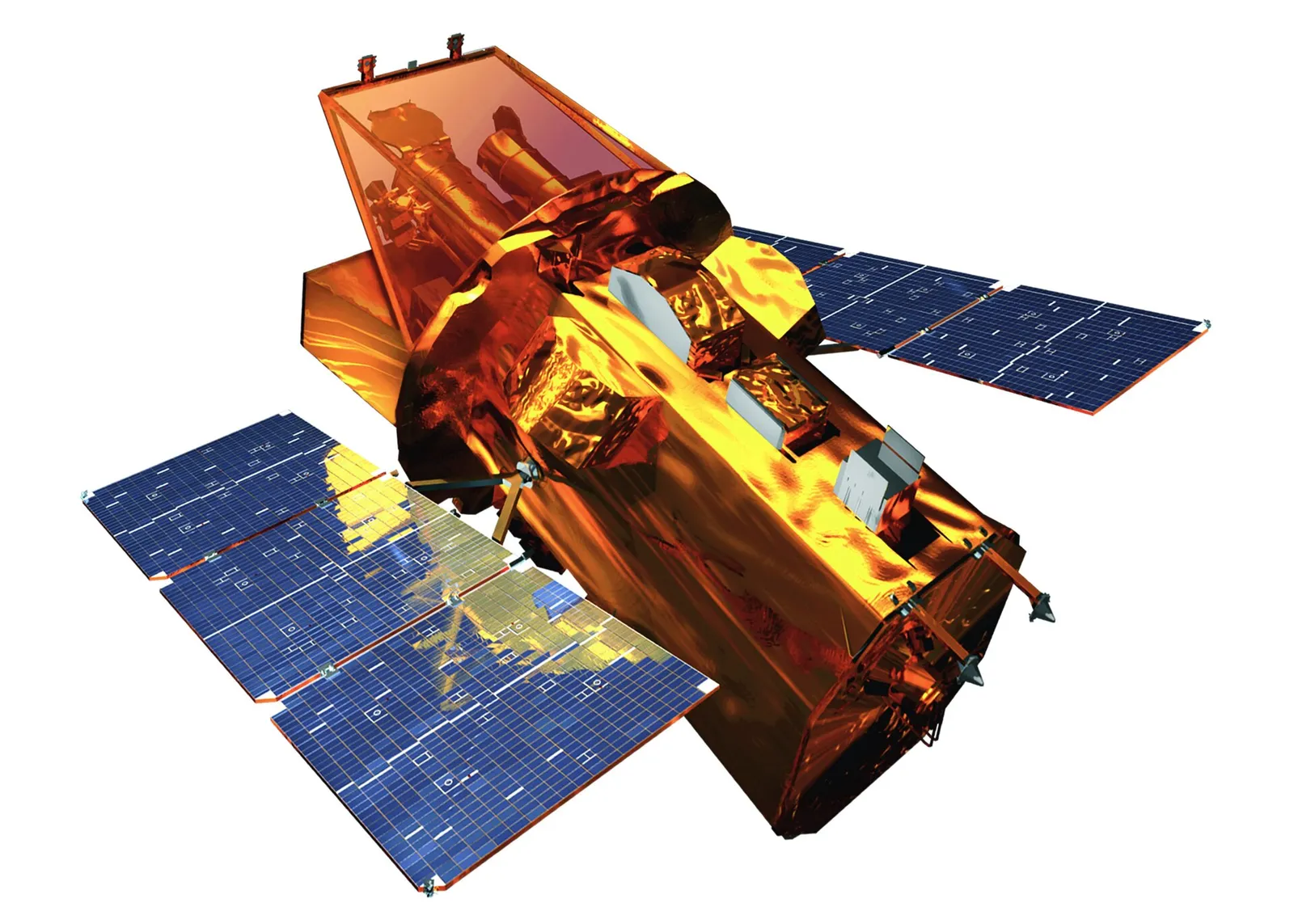
For more than 20 years, a NASA telescope has watched the sky for the universe's most violent flashes. Now it needs saving — and the rescuer is a spacecraft that launched this week to catch it.
Why Swift is falling
The Neil Gehrels Swift Observatory, launched in November 2004 to hunt gamma-ray bursts — the brief, enormously energetic explosions that mark the deaths of massive stars — orbits a few hundred miles up, in the thin outer edge of the atmosphere. That trace of air creates drag, and the drag has been worsening as heightened solar activity puffs up the atmosphere. Left alone, Swift was on track for an uncontrolled reentry by the end of 2026, Space.com reported.
The catch
To save it, NASA turned to a commercial spacecraft called LINK, built by the Arizona startup Katalyst Space Technologies. LINK lifted off on July 3 aboard a Northrop Grumman Pegasus XL — a veteran air-launched rocket making what was billed as its final flight, CBS News reported. Over the coming weeks, LINK is to rendezvous with Swift, take hold of it, and boost it back toward its original altitude of roughly 373 miles (600 kilometers), buying the observatory years of additional life.
The hard part is that Swift, like almost every satellite of its era, was never built to be docked with. It has no grapple fixture, no docking port — nothing designed to be grabbed. NASA has said that if LINK succeeds, it will be the first time a commercial spacecraft has captured and serviced a government satellite that was never intended for it.
Why it matters beyond one telescope
The stakes reach past Swift. Space is filling with aging, valuable satellites that will eventually run low on fuel or slip out of orbit, and until now the options have been to replace them at great cost or let them fall. A working demonstration that a robot can fly up, grab an uncooperative spacecraft and move it would open a new industry — refueling, repairing, repositioning and safely disposing of satellites already in orbit. NASA chose Swift partly because it is a worthy patient in its own right and partly because it is a proving ground.
For now, the observatory that has spent two decades catching the universe's brightest explosions is itself the object of a race against time. Over the next several weeks, engineers will find out whether their long-distance rescue can pull it back from the edge.