

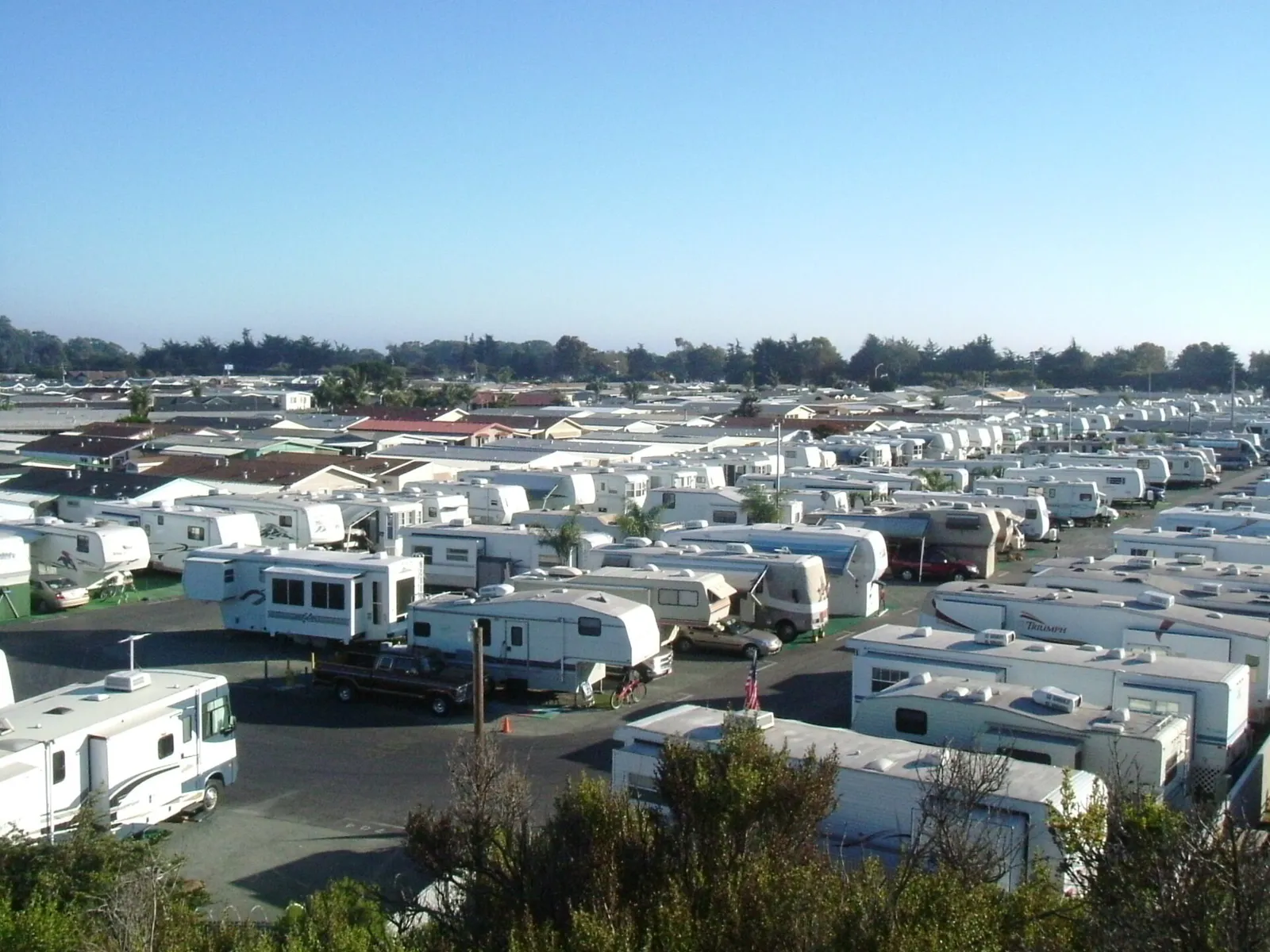
An RV park is a form of housing that most people never think about until it disappears. Orangeland, in the city of Orange, has been operating since 1972. It is being sold, and the residents who live there full time are working out where else in Southern California a person can park a home.
The answer some of them have reached is nowhere within 100 miles at a comparable rate.
What is happening
The property is expected to be redeveloped into condominiums, according to ABC7. The buyer has not been named publicly.
Park operators said they have been working with full-time tenants to help them find new places to live, and noted that many residents have already gone.
Residents learned in February that the property was going up for sale. What they have not been given is a firm date. Accounts of the timeline vary between residents, with some saying they were told they might have around a year, into roughly May. That uncertainty is its own problem: a household cannot plan a move, a lease or a job around a date nobody will confirm.
The City of Orange declined to comment.
The people
Christina Ingels described what the place has been. "This has been wonderful," she said, and said she intends to stay "till the dirty end," adding that "we may end up selling and living in an apartment again. Yuck."
A resident named Deborah described a harder sequence, having lost work around the same time as her housing. "I was really so depressed because of losing a job and losing a home," she said.
Gracie Coviello put it more lightly, describing herself as "just a Wisconsin girl living her California dream."
Those three quotes sit at different points on the same problem. An RV space is cheap relative to Orange County rents, and for people at the margins of the housing market it is often the difference between housed and not. When one closes, the residents do not move down the street. They compete for a shrinking number of spaces across a very large area.
What we could not establish
Two things a reader would reasonably want to know are not settled by the available reporting, and we are not going to fill the gaps with assumption.
The first is the legal position. California regulates mobilehome parks under a specific statutory scheme with defined protections around closure, notice and relocation impact reports. RV parks and recreational vehicle occupancy are treated differently, and whether a given resident is covered can turn on how long they have lived there and how the tenancy is documented. That distinction decides what rights these residents actually have, and it is not something to guess at. Residents in this position should get advice specific to their own tenancy rather than relying on general descriptions, including our own.
The second is whether any relocation assistance is being offered beyond help finding a space, and how many households remain. Neither figure has been made public.
The wider pattern
Orange County has been losing this kind of housing for years, and the economics are not mysterious. Land under a low-density RV park in a built-out county is worth considerably more with condominiums on it. Nothing about that is unlawful, and a family that has run a park for five decades is entitled to sell it.
The consequence is still a net loss of the cheapest housing in the area, absorbed by the people least able to absorb it. That is the part that outlasts this particular closure, and it is a question for the city and the county rather than for the owner.