

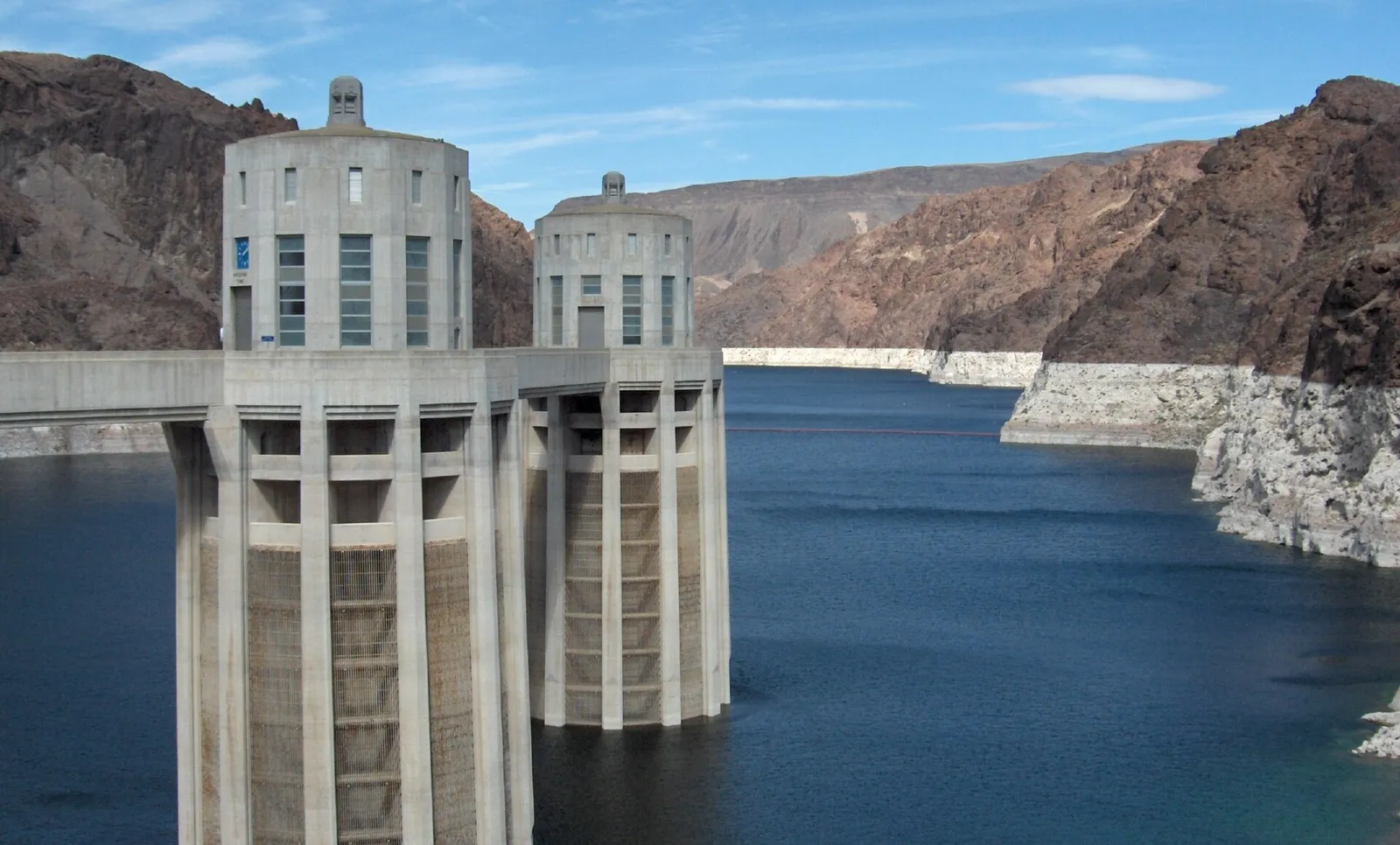
Lake Mead is expected to fall to a level lower than any it has reached since it was filled in the 1930s, according to federal projections that water managers describe as the most likely outcome rather than the pessimistic one.
The reservoir behind Hoover Dam is the largest in the country by capacity and one of the sources feeding Southern California's imported water supply. It has been declining for most of this century.
What the projection says
The forecast comes from the Bureau of Reclamation's 24-Month Study, which the agency updates monthly using the latest snowpack, runoff and operational data. Recent studies project the lake dropping roughly 30 feet from its current level over the next two years, to somewhere near 1,010 feet above sea level in 2028.
That number matters because of what it sits below. Lake Mead's record low was 1,041.71 feet, set on July 27, 2022, the lowest the reservoir had been since it filled behind the newly completed dam. The projection would take it well beneath that mark.
A caution belongs here. These are projections, not measurements, and the exact figure moves with each monthly study. Different studies issued weeks apart have produced somewhat different elevations and dates for the low point. What has been consistent across recent releases is the direction and the rough magnitude: down, by about 30 feet, to a new record. The Bureau itself notes that its projections shift as actual hydrology diverges from the assumptions built into them.
The scenario described is also the middle case. The 24-Month Study produces minimum and maximum probable scenarios alongside the most probable one, and the drier branch is worse.
Why it is falling
The basic arithmetic of the Colorado River is that more water is allocated than the river reliably produces, and has been for a long time. The 1922 compact that divided the river among seven states was negotiated during an unusually wet stretch, and the entitlements written then exceed what the river has delivered in most years since.
Two decades of drought and a warming climate have widened that gap. Reduced snowpack in the Rockies means less runoff, and higher temperatures mean more of what does fall evaporates or is absorbed before reaching the river. Lake Mead is also downstream of Lake Powell, so decisions to hold water back at Glen Canyon Dam to protect that reservoir's own operations translate directly into less water arriving at Mead.
What it means for Southern California
The Colorado is one of two long-distance sources for the region, alongside the State Water Project from Northern California, with local groundwater and recycling making up the rest. The Metropolitan Water District of Southern California, which wholesales water to agencies serving roughly 19 million people across six counties, draws its Colorado River supply through the Colorado River Aqueduct.
California's position under the shortage rules is comparatively protected. The tiered framework that governs cuts as Lake Mead declines falls hardest on Arizona and Nevada, along with Mexico under a separate agreement, because California holds the most senior priority among the lower basin states. Cuts at the current tiers have not fallen on California's 4.4 million acre-foot entitlement.
That seniority is a legal position, not a physical one. It determines who gives up water first; it does not create water. If the reservoir continues toward the elevations in these projections, the operating rules themselves come under pressure, and the states are already negotiating what replaces the current guidelines when they expire. California's protected share is one of the things on that table.
There is also a power question. Hoover Dam's generating capacity falls as the reservoir drops, because less head means less electricity from the same water, and the dam supplies power to utilities across the Southwest including in Southern California.
None of this arrives as a sudden cutoff. It arrives, as it has for twenty years, as a slow tightening: conservation mandates, higher rates, more recycling, more expensive supply. The projection simply indicates that the tightening is not finished.