We have led this front page since Sunday with the figure of at least 67 dead at Ceuta. The word doing the work in that sentence has always been "least," and the follow-up reporting explains why.
Al Jazeera reports that "on Saturday evening, police divers were still recovering bodies from the surrounding waters." Its account of the toll is not a number but a word: dozens.
So the position today is that 67 is the last figure Spanish authorities gave, that no authority has revised it, and that the search was still underway two days after the crossing. A reader should hold that number loosely.
One of the dead
Faten Ben Omar El Azizi was a Moroccan footballer. She died trying to reach Ceuta, and hundreds turned out to mourn her.
Her family says her Schengen visa was approved the same day she died.
We are attributing that to the family because that is who Al Jazeera attributes it to, and we have not seen it confirmed by any authority. Her age, her club and her hometown were not in the reporting we could verify, and we are not going to fill them in.
What the city went through
Al Jazeera's account of the two days is of a small place overwhelmed. All available beds went quickly. Businesses shut their doors.
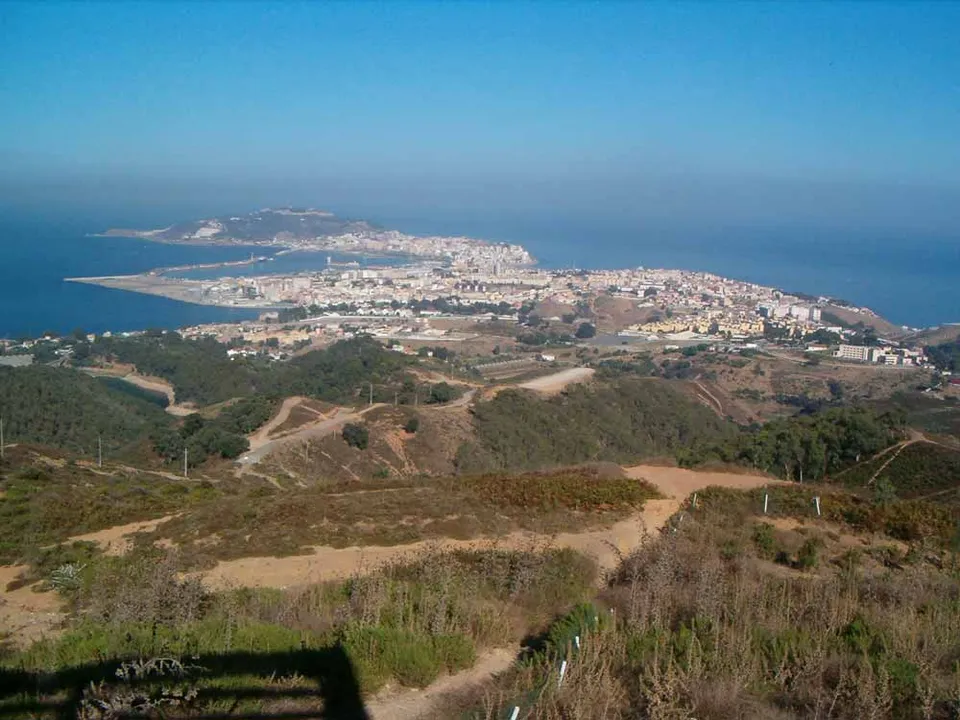
Ceuta has about 84,000 residents. An arrival of tens of thousands of people over roughly 48 hours is not a policy problem in the abstract; it is a bed problem, a water problem and a bread problem, immediately.
The argument in Spain
Spain's government blames criminal gangs and traffickers for driving the crossing.
Opposition politicians blame the government's immigration policy, and Al Jazeera reports some of them described what happened as "an invasion."
Those are the two positions and we are reporting them as positions, not settling between them. What can be said factually is that no one in the reporting we could verify has produced evidence establishing why the crossing happened on this scale on these particular two days.
A claim that traveled
Zia Yusuf of Reform UK, the British party, posted on X about what he called "the 60,000 strong invasion" and said migrants had told reporters they were trying to get to Britain.
We are reporting that the post exists and what it says, because it is part of how this event is being argued about in Europe. We are not reporting its central claim as established. Nothing in the sourcing we could verify supports a finding about where the people who crossed intended to end up, and a social media post is not that evidence.
What we are not printing, again
Last week we declined to publish a claim that Italy had suspended Schengen arrangements with Spain, because we could verify only that Italy's prime minister spoke of shared responsibility while France announced it was tightening its border.
The claim has come back around, now with additions: that Italy reintroduced border controls with Spain, and that Finland and Denmark called for Spain's suspension from the Schengen zone. We could not verify any of it. Al Jazeera's reporting on Ceuta does not mention Italy, Finland, Denmark, Schengen or border controls at all.
It is out again, and readers should treat it with suspicion wherever they encounter it until someone shows the source.
Ireland holds the rotating EU presidency and has called an emergency meeting for Tuesday. That much we verified last week and it has not changed.