

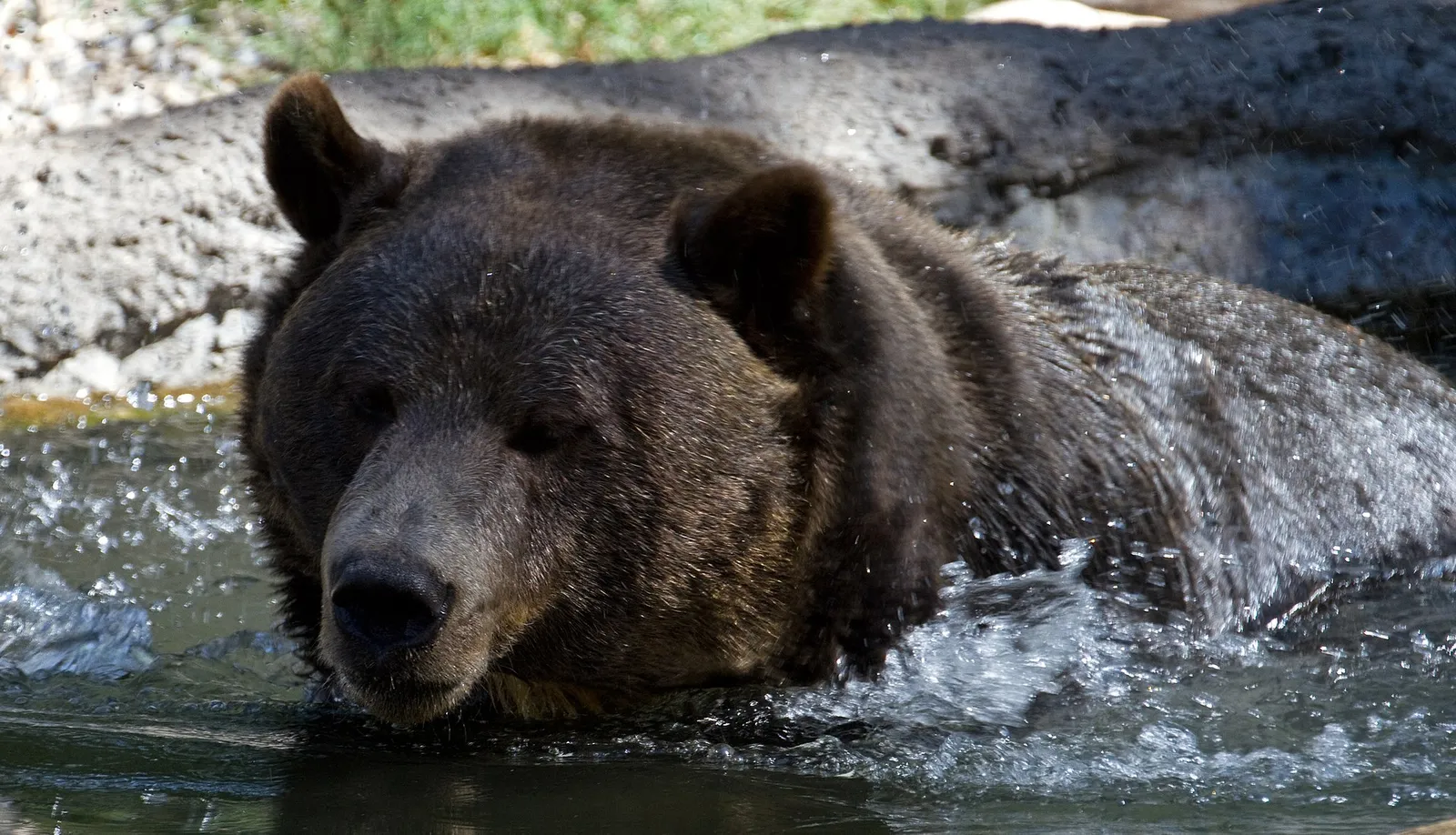
It began as an ordinary morning at a camp near Mount Engadine Lodge in Alberta's Kananaskis Country: coffee in hand, dog on a leash, gravel underfoot. Then a grizzly bear emerged from the trees — and would not leave.
A standoff caught on camera
For more than a minute, captured on video and later shared online, the bear stalked the woman and her dog down a driveway, rose onto its hind legs, and charged more than once, closing to within a meter before backing off. The woman — whose identity has not been firmly established across news accounts — held her ground the entire time, shouting at the animal and backing away slowly without ever running or dropping the leash. At one point she threw her coffee mug at the bear; when it paused, she retreated toward camp as others waved and yelled to distract it. No one was hurt, Global News reported.
"Persistent, dog-focused behaviour"
Alberta Forestry and Parks confirmed the encounter and issued a bear warning covering Mount Engadine Lodge, Mount Shark Road and the Rummel Lake Trail, describing the animal's "persistent, dog-focused behaviour" and repeated approaches within a meter of people. Tent camping was suspended at two nearby campgrounds, with only hard-sided campers allowed to remain. Kananaskis Country, a backcountry region in the Rocky Mountains southwest of Calgary, is well-known grizzly habitat, and encounters are an accepted hazard of travel there.
What the experts say: stand, don't sprint
The woman's instincts lined up closely with what wildlife agencies teach. The single most important rule, according to Parks Canada, is simple: do not run. Running can trigger a chase, and a grizzly can sprint far faster than any person. The recommended response is to stop, stay calm, avoid sudden movements and back away slowly.
It also helps to understand the difference between a bluff charge and an attack. Bears frequently charge to say you are too close, rushing forward and then veering away or stopping short. Alberta's official guidance is blunt: a bear may come very close during a bluff charge and may charge more than once, and the rule remains never to run. Standing your ground or retreating slowly signals that you are not prey.
Agencies also urge anyone heading into bear country to carry bear spray within easy reach — not buried in a pack — and to know how to use it. And they draw a critical distinction for the rare cases when contact is unavoidable: in a defensive encounter, such as a bear protecting cubs or food, play dead, lying face-down with hands clasped behind the neck until the animal leaves; but in a predatory encounter — a bear that follows and stalks calmly, or attacks at night — do not play dead. Fight back as forcefully as possible.
A leash, a mug, and a lesson
Wildlife officials specifically noted that the dog stayed leashed throughout — a detail that very likely kept the confrontation from escalating, since a loose or barking dog can turn a curious bear into a dangerous one. The footage has spread widely, drawing both admiration for the woman's composure and a steady stream of commentary from seasoned outdoorspeople.
The takeaway, for anyone venturing into grizzly country this summer, is the same one the agencies have repeated for years: the distance between a frightening story and a tragic one is often measured not in speed, but in stillness.