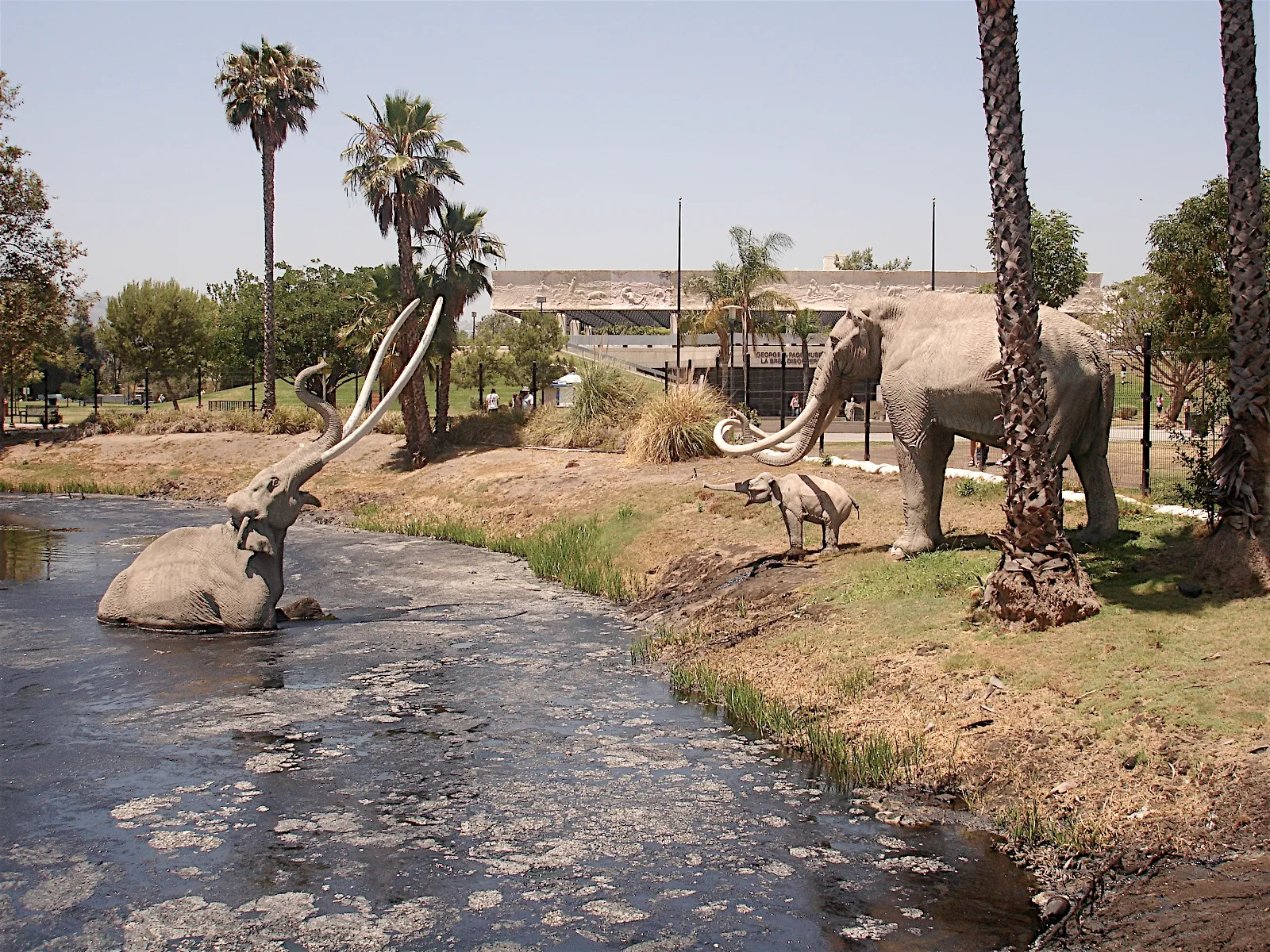
For one night, the asphalt-scented air of Hancock Park will smell a little like a 1970s dance floor. On Saturday, June 27, the La Brea Tar Pits is hosting "Last Dance," a disco-themed farewell party — DJ, dancing and a costume contest included — before its museum closes for a long-awaited overhaul.
A send-off beneath the mammoths
The party marks the end of an era at the George C. Page Museum, the building that has welcomed visitors to the Ice Age site since 1977, ABC7 reported. The museum's last day is in early July, after which it closes for roughly two years. There is something fitting about a disco send-off: the building opened in the bell-bottom era, and now it's dimming the lights on one chapter to open a better one.
What stays open
Crucially for Angelenos who treat the tar pits as a backyard, Hancock Park itself stays open throughout construction. Active fossil excavation, scientific research, behind-the-scenes tours and the museum's Mobile Museum program will all continue, so the science never fully stops even while the galleries go dark.
A $240-million reimagining
This is no quick refresh. The project, branded Reimagine La Brea Tar Pits, carries a fundraising goal of about $240 million, of which roughly $131 million has been raised, the institution says. Backers include Los Angeles County, the state of California and several family foundations.
When it reopens — targeted for 2028, in time for the Los Angeles Olympic and Paralympic Games — visitors will find a substantially reworked 13-acre site. Plans call for a new entrance along Wilshire Boulevard, visible fossil-preparation labs where the public can watch scientists at work, a looping pedestrian path through the park, gardens planted with native species, and a new Ice Age research center meant to make Los Angeles a hub for the study of the Pleistocene.
Why it matters
Generations of Angelenos grow up with the tar pits and the life-size mammoth sculpture sinking into the lake — a piece of deep time wedged improbably between Wilshire's office towers and the museums of Miracle Mile. The bubbling asphalt that trapped saber-toothed cats and dire wolves tens of thousands of years ago will keep bubbling, unchanged, all through the renovation. The building around it is what's getting reinvented.
So put on something sparkly and go dance by the tar pits on Saturday. It's not every museum that gets a disco send-off — and not every dance floor that's been collecting fossils for 50,000 years.