


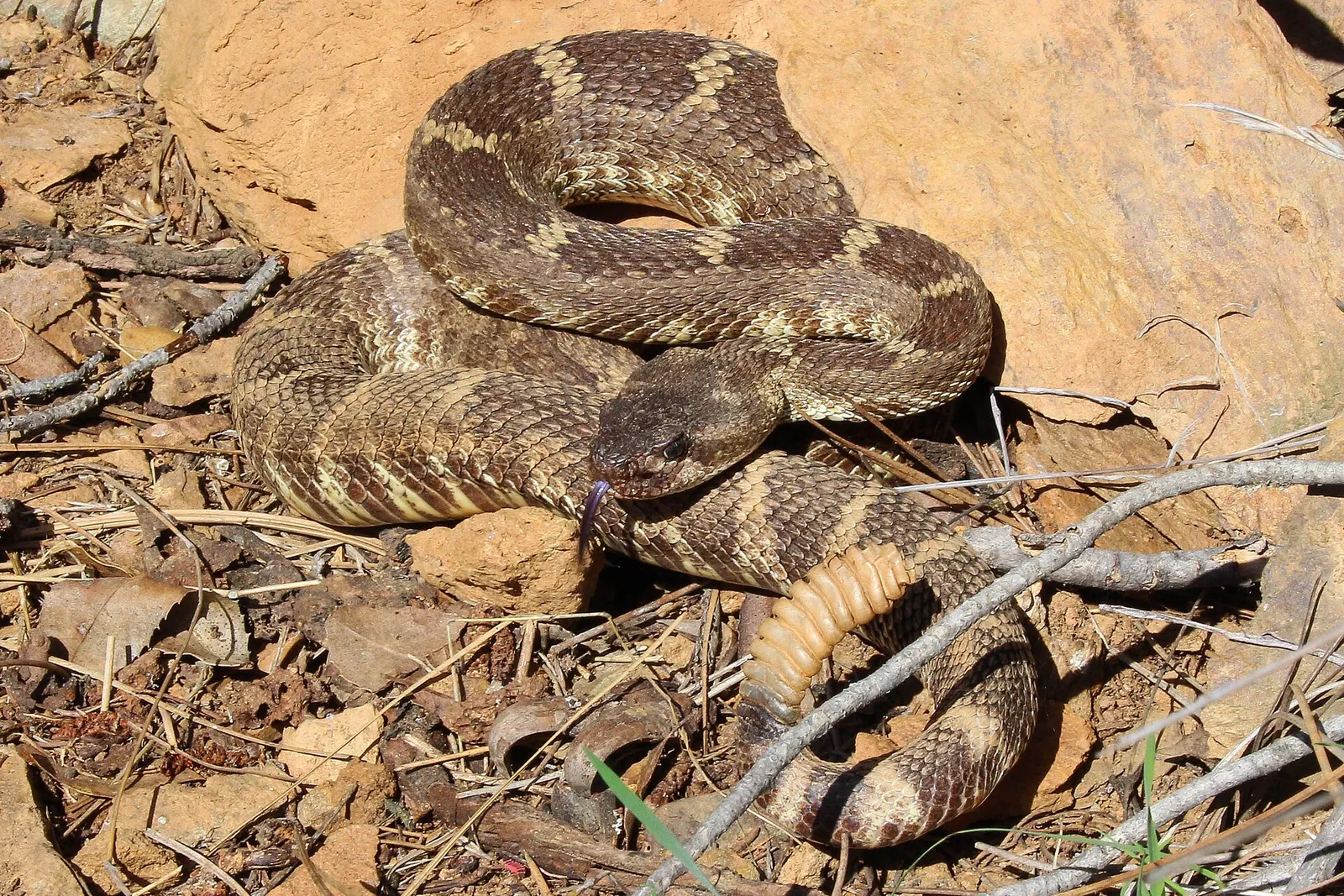
A note on this piece: this is a seasonal service explainer drawn from standing public-health and wildlife guidance, not a report on any specific incident. If you or someone near you is bitten, stop reading and call 911 or the Poison Help line at 1-800-222-1222.
Southern California is rattlesnake country, and summer is when the two of us, people and snakes, are most likely to cross paths. The reasons are simple and worth knowing, because understanding the animal is most of how you avoid the bite.
Why now
Rattlesnakes are cold-blooded, so their activity tracks temperature. They emerge from winter dormancy in spring and are most active through the warm months, roughly April into October. In the heat of a Southland July, they tend to move at the cooler ends of the day, morning and evening, and to spend the hot midday in shade: under brush, rocks, woodpiles, parked equipment, and yes, occasionally under something left on a porch.
They are native here, throughout the foothills, canyons, chaparral and the wildland edges of the San Gabriel and San Fernando valleys, the Santa Monicas, and the Inland Empire. A yard that backs onto open space is rattlesnake habitat, not a place they have invaded.
The species most people encounter is the Western rattlesnake, along with the Southern Pacific and, in the deserts, the sidewinder and others. For practical purposes the identification does not matter. Treat any rattlesnake as venomous and give it distance.
How bites actually happen
The important thing, and the reassuring thing, is that rattlesnakes do not hunt people. A snake would vastly rather not bite you; venom is metabolically expensive and meant for prey it can eat. Nearly every bite is defensive, and nearly every defensive bite happens in one of two ways: someone steps on or very near a snake they did not see, or someone puts a hand where a snake is resting and cannot be seen.
That single fact drives all the useful advice.
Avoiding it
- Stay on trails and watch where you step and reach. Most hiking bites are on the lower leg or the hand. Do not step over a log or rock without seeing the far side; step on it and then over.
- Do not put hands or feet where your eyes are not. Reaching into brush, under rocks, into woodpiles, or blindly onto a shelf or a shaded porch step is how the hand bites happen.
- Wear closed shoes and consider long pants on foothill trails. Sandals in chaparral are an avoidable risk.
- Keep dogs leashed in snake country. Dogs investigate with their faces and are bitten often; a leash lets you steer away.
- Around the house, keep the yard's edges clear: trim low brush, move woodpiles away from the door, and be deliberate about reaching into anything at ground level near open space, including packages or objects left in shaded spots during warm weather.
- Give a snake room. If you see or hear one, stop, locate it, and back away. Rattlesnakes can strike only a fraction of their body length. Most bites to adults who see the snake come from trying to move, catch or kill it. Leave it alone and it will leave.
If someone is bitten
This is the part to get right, and much of getting it right is knowing what not to do.
Do:
- Move away from the snake so it cannot strike again, then keep the person calm and as still as possible.
- Call 911 or the Poison Help line, 1-800-222-1222, immediately. The California Poison Control System staffs that line around the clock.
- Get to an emergency room. Rattlesnake envenomation is treated with antivenom, and time matters.
- Remove rings, watches and tight clothing near the bite before swelling starts.
- If you can do it safely and without delay, note the time of the bite and keep the bitten limb roughly still; let the professionals direct positioning.
Do not:
- Do not cut the wound, and do not try to suck out venom. These folk remedies do not work and cause harm.
- Do not apply a tourniquet or tightly constrict the limb.
- Do not apply ice.
- Do not give the person alcohol or caffeine.
- Do not waste time trying to catch or kill the snake for identification. The hospital does not need it, and the attempt risks a second bite.
Keep it in proportion
Rattlesnake bites in California are, in the vast majority of cases, treatable when the person gets prompt medical care, and deaths are rare. The point of all this is not fear. It is that a serious, painful, expensive medical emergency is very largely avoidable by two habits: watch where you put your hands and feet, and give the animal the distance it wants.
The snakes were here first, they are doing exactly what a July afternoon tells them to do, and the summer is long. A little attention on the trail and around the yard is the whole of it.