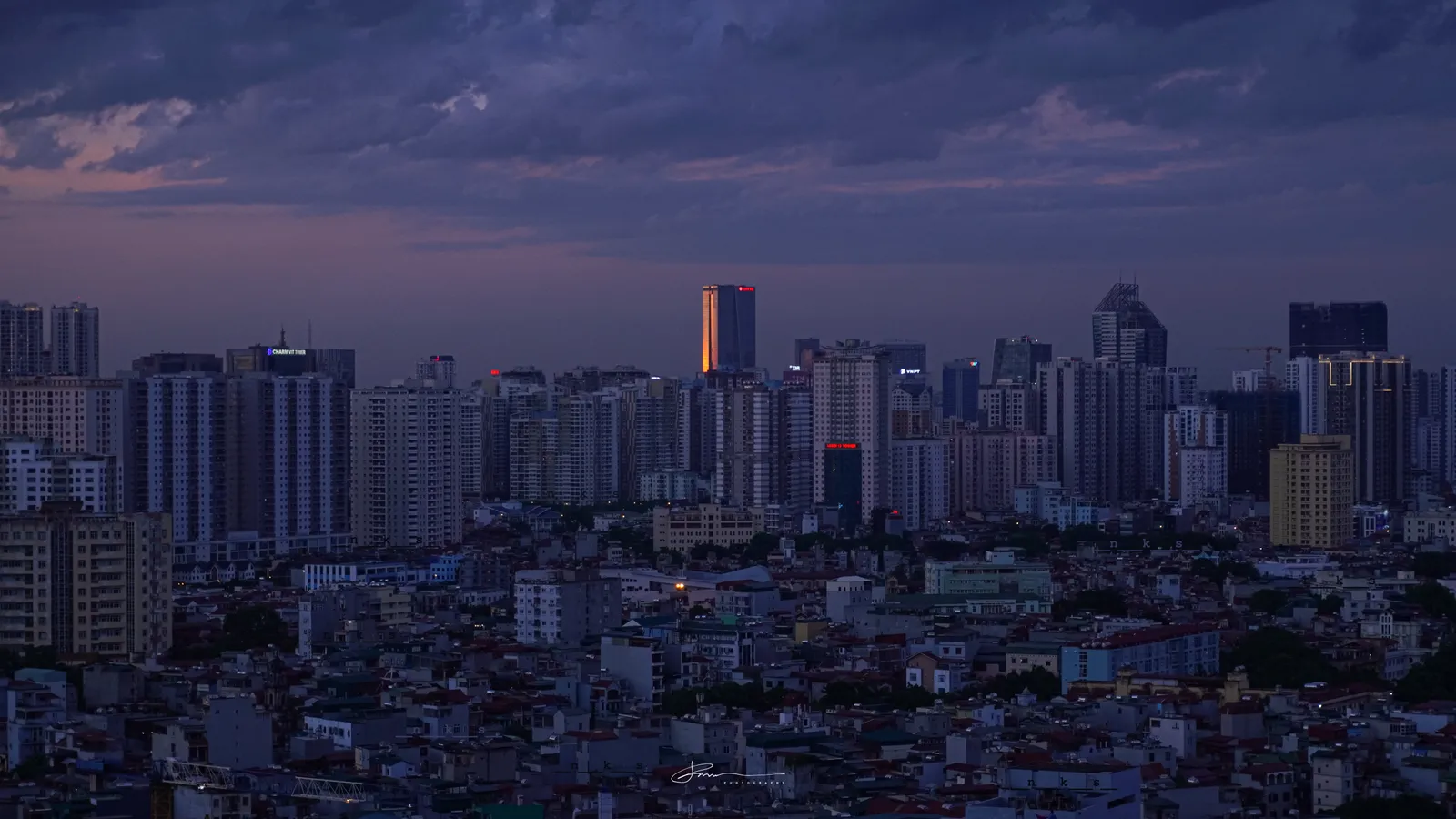
On the southern outskirts of Hanoi, crews working around the clock are raising a stadium so large it is meant to break a world record — and, its chroniclers argue, to illustrate something about how the modern economy works.
A record-setting build
The venue, currently called Hùng Vương Stadium, is designed to seat about 135,000 people, which would make it the largest stadium in the world, surpassing North Korea's roughly 130,000-seat Rungrado May Day Stadium, according to StadiumDB and Vietnamese business coverage. It is the centerpiece of a roughly $35 billion "Olympic Sports Urban Area" spread across more than 9,000 hectares, with groundbreaking in December 2025 and completion now targeted for 2027, ahead of schedule. Its facade evokes the ancient Đông Sơn bronze drum, a symbol of pre-colonial Vietnam.
One company, one man
The project is built and funded by Vingroup, Vietnam's largest private conglomerate, chaired by Phạm Nhật Vượng — Southeast Asia's richest person, worth an estimated $24 billion or more. Vingroup's reach spans real estate, the electric-vehicle maker VinFast, health care, retail and hospitality, and its revenues have amounted to a meaningful slice of Vietnam's entire economy (a figure often cited at around 1 percent of GDP, based on 2022 data). The stadium is not just a venue but the anchor of a planned district for hundreds of thousands of residents, complete with hospital, hotel and aquatic arena.
The argument, and the doubts
The New York Times, in the piece that prompted this story, uses the stadium as a lens on the global economy — arguing that the concentration of wealth and corporate power in a single "everything conglomerate" both drives growth and deepens inequality, a pattern echoed in South Korea's chaebol and in India's biggest business houses. That framing is the Times's and its economists'; the Herald notes it as analysis, not settled fact.
What is less disputed is the scale — and the skepticism. Analysts have questioned whether Vietnam, a nation of about 100 million with incomes still below the global average and a football culture that has never filled anything close to 135,000 seats, can sustain a stadium this size commercially, the New Straits Times reported. Critics add that Vingroup's dominance can crowd out smaller competitors across whole sectors.
Why it resonates
Vingroup says it hopes the complex could one day host the Asian Games or an Olympics, and it is fitting the stadium with a giant retractable roof and other high-tech features. Whether the ambitions pan out, and whether a middle-income economy can keep the world's biggest stadium full, remain open questions. But the spectacle makes a broader point hard to miss: in Vietnam, as in much of the world, a growing share of what gets built — the towers, the car plants, the hospitals, and now the stadiums — carries a single name above the gate.