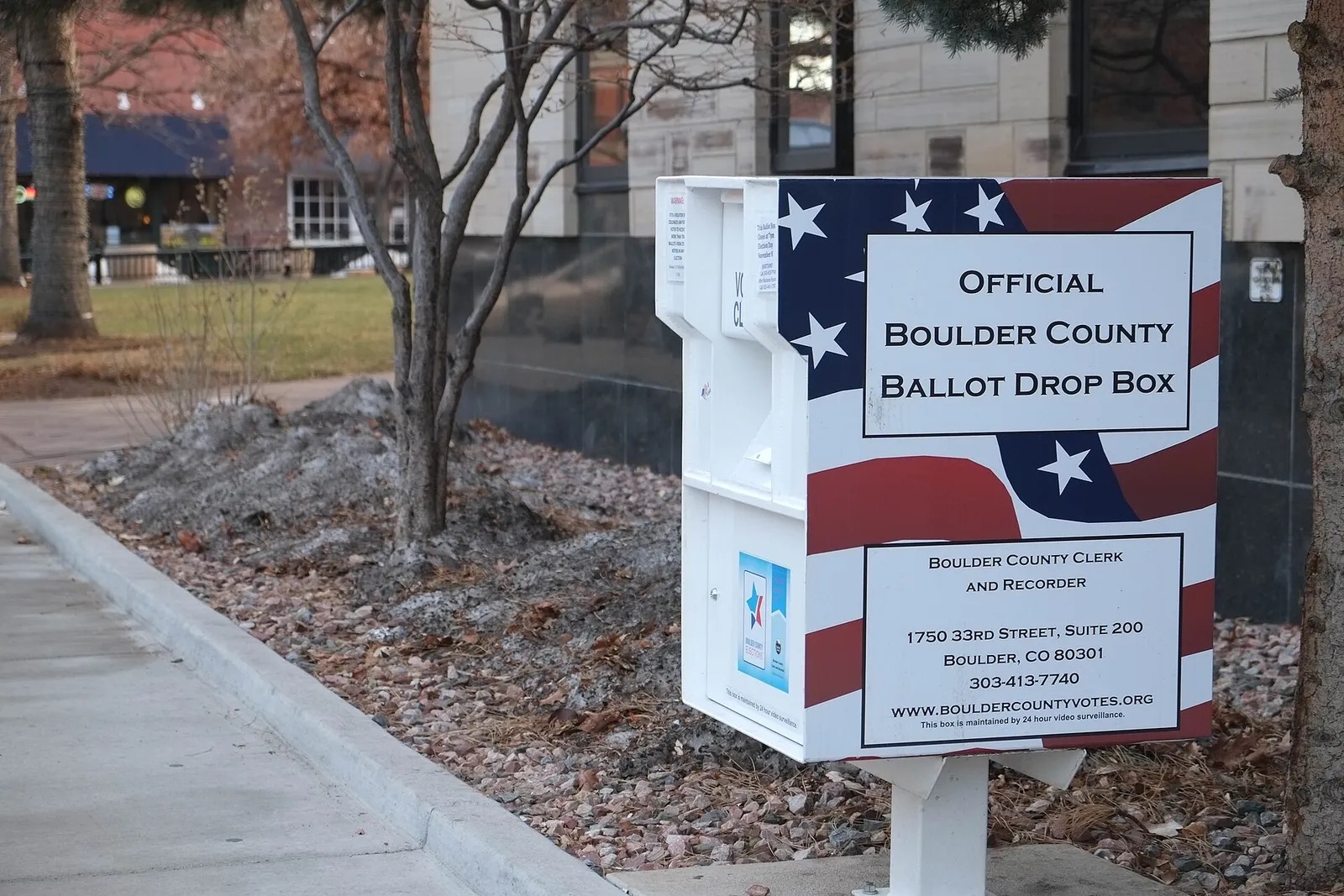
President Trump used a televised primetime address on July 17 to announce that the federal government had identified 250,000 noncitizens registered to vote. The next day Homeland Security Secretary Markwayne Mullin put it plainly: "We've identified 250,000 noncitizens registered to vote in just four states," Votebeat reported.
The four states are California, Nevada, New Jersey and Pennsylvania, and each received a letter from Mullin. California is the bulk of the number. The letters said the state may have as many as 190,832 noncitizens on its rolls, against 14,576 in Pennsylvania, 15,903 in Nevada and 35,152 in New Jersey.
Two numbers, not one
The letters actually contain two different figures, and the distinction is the whole story.
Alongside the larger totals, the department reported a smaller count of records that matched what it said were its own files: 118,003 across the four states, of which 81,336 were in California. Those, the letters said, matched on "name, date of birth, address and Social Security number of a noncitizen in DHS records," LAist reported. Mullin's letters described the work as a preliminary review.
That leaves a gap of well over 100,000 between the headline figure and the matched records, and the department has not publicly explained what fills it. It has also not published its methodology.
Where the data came from
The letters said the department analyzed publicly available voter rolls. Public voter files do not contain Social Security numbers, which is the point California and Nevada have pressed hardest.
Secretary of State Shirley Weber told the department she doubts the exercise at its root. "I have serious doubts about the reliability of your data and accuracy of your claims, since my office has not shared our statewide voter registration list with DHS or any other federal agency or official," she wrote, according to LAist. Nevada Secretary of State Cisco Aguilar made the same point more bluntly, noting that the federal government is suing his office to obtain voter data: "You're suing me because I wouldn't give you that data. So where did you get it?"
Nevada called the figures wildly speculative. Pennsylvania's response emphasized that all available evidence shows noncitizen voting is extremely rare across the country. New Jersey's governor said he believes the release is an attempt to undermine confidence in elections. The four states have declined to hand over voter records containing personal identifying information.
The tool at the center of it
Much of the federal government's recent voter-roll work has run through SAVE, the Systematic Alien Verification for Entitlements system, a Homeland Security database built to check immigration status for benefits programs rather than to audit voter files. States that have run their rolls through it have generally come back with numbers far smaller than the administration's, and election administrators have warned that the system misclassifies naturalized citizens, whose records it does not always hold in current form.
In late June a federal judge halted the use of SAVE for this purpose, finding that the way it had been set up was unlawful and that its inaccuracies risked disenfranchising eligible voters, LAist reported.
What is settled and what is not
Two things are not in dispute. Voting in a federal election as a noncitizen is a crime that carries deportation, and registration is not the same as voting: appearing on a roll does not mean a ballot was cast.
What is in dispute is the number itself, and the administration has not yet produced the underlying data to the states it accused. Until it does, California's elections office and the department disagree not about interpretation but about whether the 190,832 figure describes anything at all. That disagreement now sits inside a midterm year, which is why every party to it is treating a data question as a political one.