

There are two separate things being called "film" in the marketing around "The Odyssey," and the difference between them is the reason your ticket options look the way they do.
Taylor Umphenour, described by LAist as one of Los Angeles's top IMAX projectionists and one of the people who helped retrofit the Alex Theater in Glendale, gives the mechanical version, which is clearer than most of the marketing.
What IMAX 70mm actually is
"What IMAX did was they took 70mm film, which runs vertically through the projector, and they turned it on its side, and then they repeated it over three times," Umphenour said.
That is the whole trick. Ordinary 70mm film travels through a projector the way 35mm does, top to bottom, one frame after another. IMAX runs the same width of film sideways, so each frame occupies about three times the area. The image is not being enlarged; there is simply more negative holding it.
"When you increase the size of the film, you increase that clarity and that sharpness," he said, "because you're allowing the emulsion to contain all that information, but you're giving it a wider image area to hold it."
The consequence people notice in the room is shape rather than sharpness. A widescreen image spreads sideways. IMAX's frame is proportionally much taller. "Widescreen fills your field of vision left to right," Umphenour said. "But what IMAX does, it takes that even further and it fills your field of vision all the way to the top and all the way to the bottom."
Where you can actually see it
For "The Odyssey," five theaters in Southern California can run IMAX 70mm: the TCL Chinese Theatre in Hollywood, Regal Irvine Spectrum, Regal LA Live, Regal Edwards Ontario Palace and the Universal Cinema AMC at CityWalk.
The Alex Theater in Glendale is showing the standard 70mm version, which is a different and also increasingly rare thing.
That is the list. Everything else in the region showing the film is showing a digital presentation, including auditoriums branded as IMAX, which use digital projectors rather than running film.
Why the number is five and not fifty
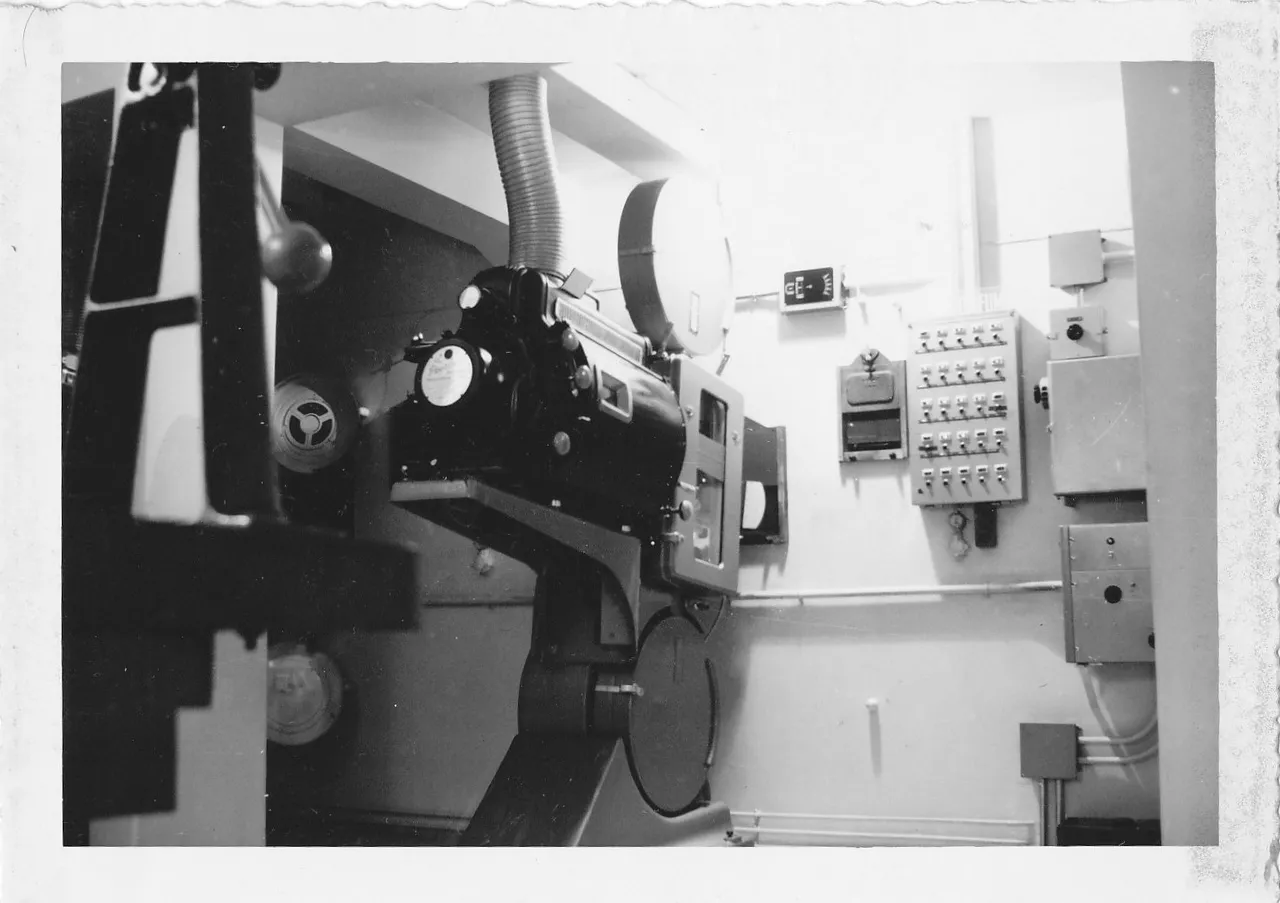
The constraint is physical. Running film at this scale requires a projector that almost nobody manufactures anymore, a booth with room for it, and a person who knows how to thread and maintain it. Prints are heavy, mechanically fragile, and have to be handled by someone who has done it before.
Digital projection removed all of that, which is why it won. A digital presentation needs no projectionist in the booth for each show and no print to ship, inspect and repair. The theaters that kept the film equipment did so as a deliberate choice, usually because a particular filmmaker's audiences kept turning up for it.
Which makes the projectionist the actual bottleneck. The equipment can be maintained if someone knows how; the knowledge is the scarce part, and it is held by a small number of people, several of whom are in Los Angeles because this is where the demand for it survived.
A note on what you are buying
The word IMAX on a ticket does not tell you which of these you are getting. If the distinction matters to you, the thing to check before buying is whether the auditorium is running 70mm film or a digital presentation. Theaters that have the film capability generally say so explicitly, because it is the reason people drive across the county to sit in their building.