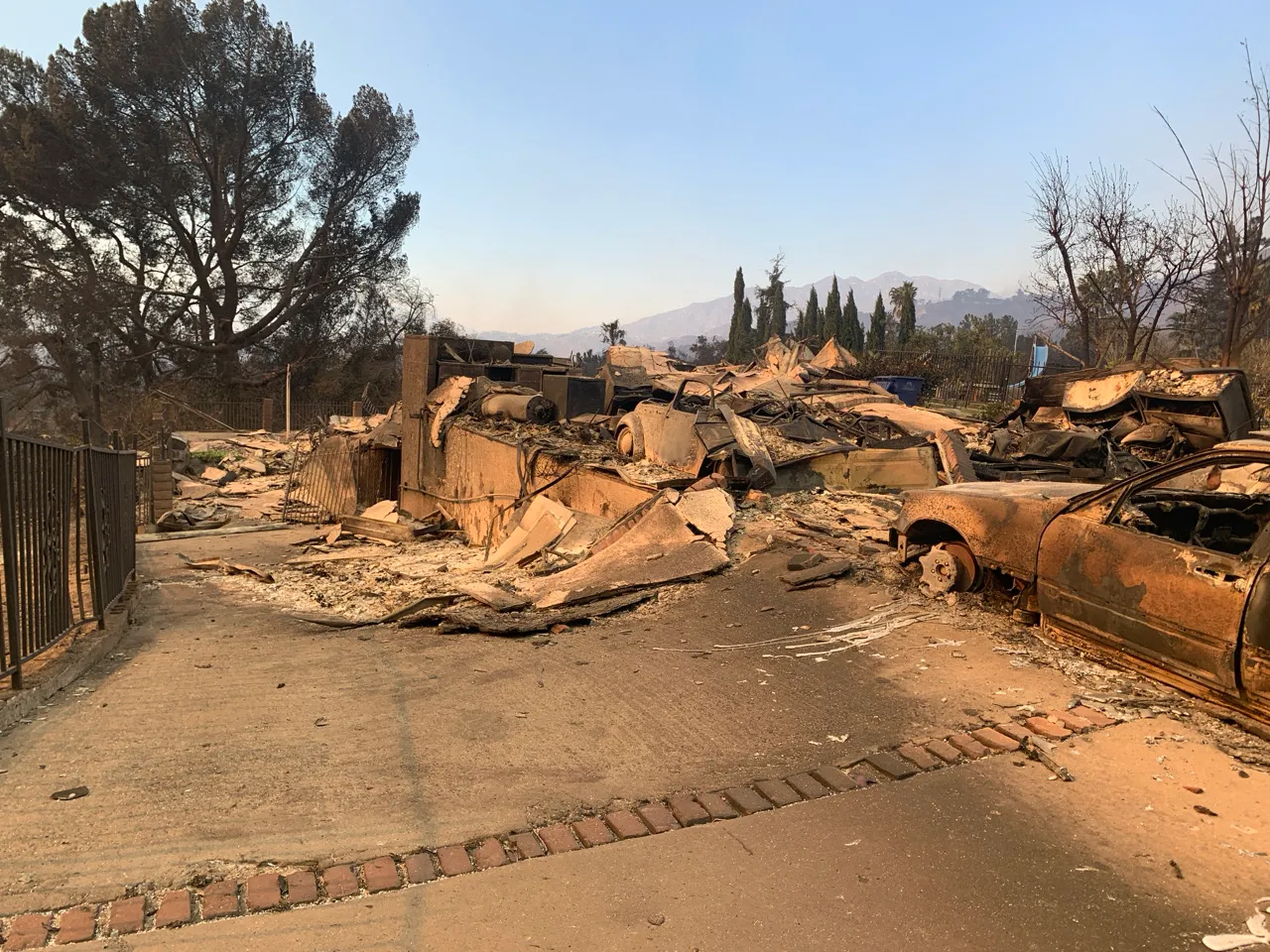
Eighteen months after the Eaton Fire tore through Altadena, the unincorporated Los Angeles County community is caught in a debate that reaches far beyond its scorched blocks: as it rebuilds, should California's push for denser housing apply — or should a burned town be allowed to rebuild what it lost?
The fire and the fear
The January 2025 Eaton Fire was one of the most destructive in California history, killing at least 17 people and destroying thousands of Altadena homes and structures. As residents began the slow work of rebuilding, many grew alarmed at how much fire-damaged land was being snapped up by investors. Between February and July 2025, investors bought close to 49% of the Altadena properties that sold — up from roughly 10% in the same stretch a year earlier, CalMatters reported.
The bill
That anxiety gave rise to Senate Bill 1090, introduced by state Sen. Sasha Renée Pérez, a Democrat whose district includes Altadena. The measure would impose a five-year pause in Altadena on two state laws — Senate Bill 9 and Senate Bill 1123 — that override local zoning to allow lot splits and additional units on single-family parcels, Pérez's office said. Backers cast it as a shield against developers using disaster to remake a neighborhood that was overwhelmingly single-family before the fire. Recent amendments would also bar large property owners from making unsolicited offers to buy fire-damaged homes for several years.
The bill has advanced: it cleared the Assembly Housing and Community Development Committee on a unanimous vote and moved on for further consideration, though it is not yet law.
The other side
Not everyone in Altadena agrees the exemption helps them, and the fight has divided the community, Pasadena Now reported. Pro-housing advocates argue the very density rights the bill would suspend can be a financial lifeline: the ability to split a lot or add a rental unit can help an owner finance reconstruction, and more units could ease an affordability squeeze that has only worsened since the fire, when much of the area's rental stock burned. Suspend those tools, critics say, and some survivors may find it harder — not easier — to come back.
Supporters counter that the measure still allows accessory units and affordable and multifamily housing along commercial corridors, and that its aim is to slow speculation, not block rebuilding.
Recovery, unresolved
Underlying the dispute is how slowly Altadena is coming back. By late 2025, only a small fraction of the thousands of damaged homes had been rebuilt, even as permits piled up. The SB 1090 fight is, in that sense, a proxy for a larger question facing California: whether the state's urgent drive to build more housing should bend for a community trying to recover from catastrophe — and who, in the end, gets to decide what a rebuilt Altadena looks like. For now, the answer is working its way through the Legislature, block by contested block.