Most corporate announcements about artificial intelligence come with a quiet subtext of job cuts. SAP is trying to tell a different story — with mixed evidence.
The pledge
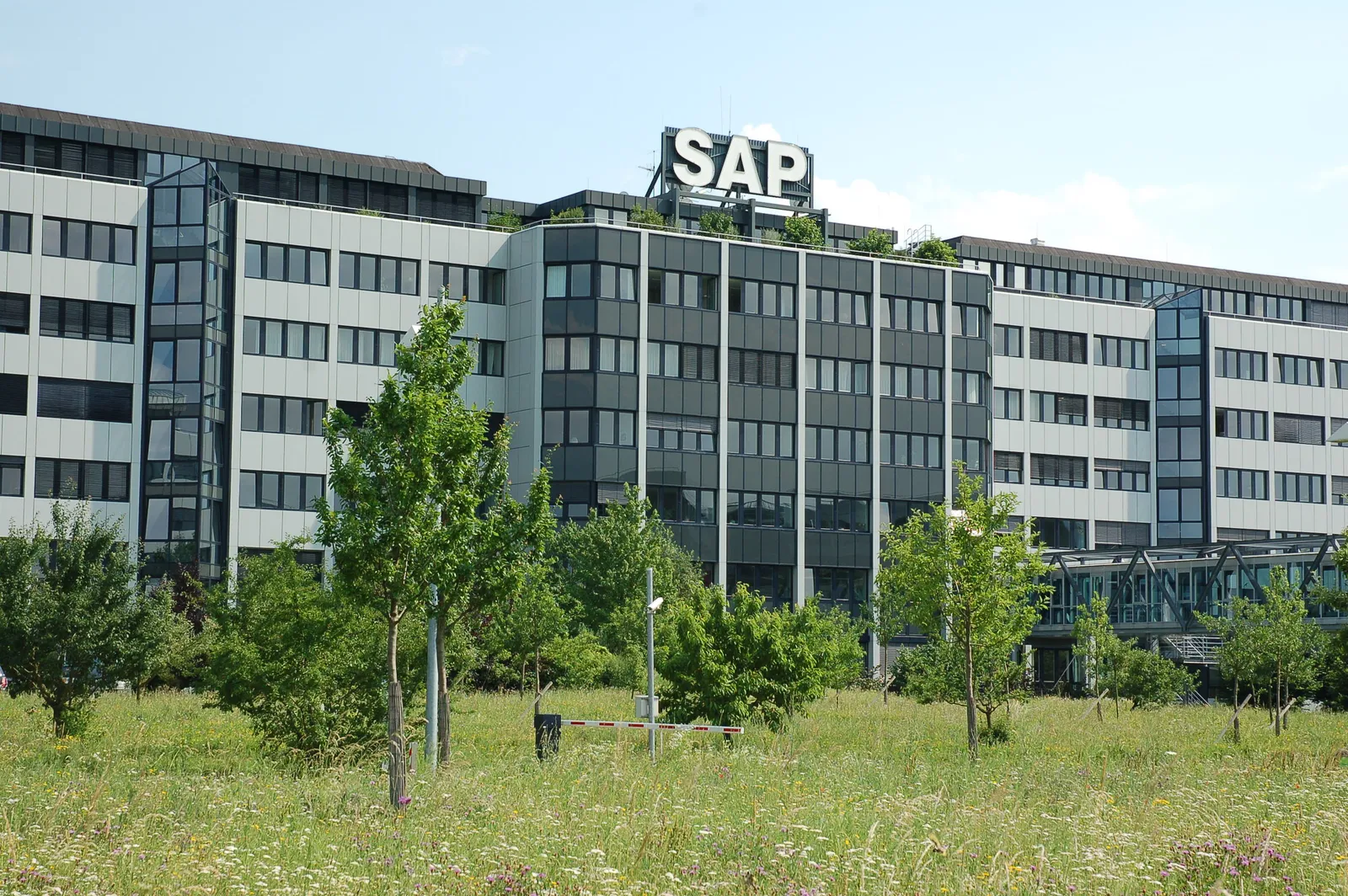
SAP, the Walldorf-based maker of business software used for payroll, supply chains and finance at organizations worldwide, employs more than 100,000 people and says its AI overhaul will mean retraining and redeploying staff rather than mass layoffs. The company has committed to devoting a share of employees' working time to learning and to building AI proficiency into every role, framing the shift, in its executives' words, as pairing people with AI rather than replacing them, Techzine reported. Its stated approach is genuinely unusual in a tech industry that has largely used AI to justify headcount cuts.
The complicating record
SAP's own history muddies the message. In January 2024 the company announced a roughly $2.2 billion restructuring affecting about 8,000 positions — emphasizing voluntary exits and reskilling while hiring aggressively for AI roles, and saying it expected to end the year with similar headcount, CIO Dive reported. But its chief financial officer told the German daily Handelsblatt late last year that SAP now plans to trim 1 to 2 percent of its global workforce annually as a standing policy — thousands of jobs a year, compounded.
Chief executive Christian Klein has been strikingly candid about the trajectory, telling reporters AI could mean essentially "no one developing software inside SAP" within three to four years, with demand shifting toward product managers who direct AI tools and data scientists who understand business processes, Dataconomy reported. That forecast sits awkwardly beside the "no layoffs" framing: SAP is telling workers AI will augment them while telling investors it will reshape what workforce it needs.
An industry cutting, not retraining
SAP is moving against a harsh backdrop. The outplacement firm Challenger, Gray & Christmas counted 87,714 U.S. job cuts attributed to AI through May 2026, and researchers have documented steep employment declines among the youngest software developers even as older ones held steadier. Against that, a company committing publicly to reskilling stands out — but the commitment's durability is the question.
Economists are skeptical
Labor economists doubt corporate retraining alone can absorb the shock. Research on past large-scale retraining programs has shown mixed results, and skills can go stale before a program ends. The MIT economist and Nobel laureate Daron Acemoglu has argued the data does not support "exuberant forecasts" of broadly shared AI gains, as noted in a Carnegie Endowment analysis that mapped experts into camps ranging from the alarmed to the cautiously optimistic — none of which foresees a smooth, company-led, reskilling-driven transition.
The German factor
SAP's approach is also shaped by where it operates. German labor law gives works councils real power to slow layoffs, and the country faces a demographic shortage of skilled workers that makes retention more attractive than in the U.S. market. In other words, SAP's playbook reflects German institutions as much as any philosophy. Whether "AI without layoffs" proves a model or a slogan will depend on numbers SAP has not yet had to publish — and on whether the retraining keeps pace with what its own CEO says is coming.