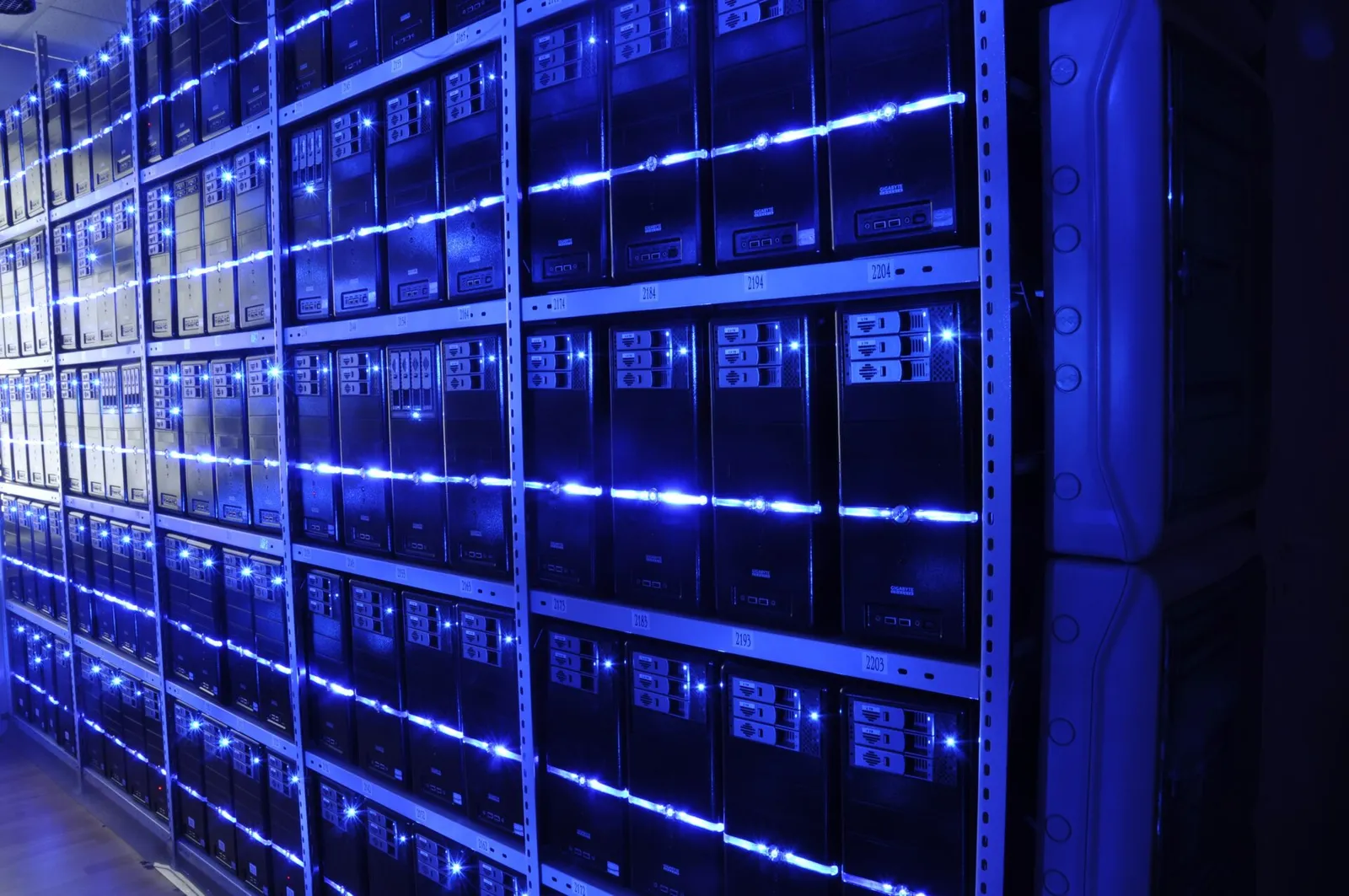
Artificial intelligence runs on electricity, and a lot of it. As the industry races to build ever-larger data centers, that demand is running into a threat the buildings were not designed to handle: severe weather.
A demand curve heading straight up
Global data centers consumed an estimated 240 to 340 terawatt-hours of electricity in 2022 — roughly 1 to 1.3 percent of the world's total — before the generative-AI boom fully arrived, according to the International Energy Agency. The trajectory since has been steep. The IEA's Electricity 2025 report projects that U.S. data-center growth alone could, within a few years, add electricity demand comparable to the entire consumption of a large state — a forecast the agency stresses carries wide uncertainty.
The strain is most visible in smaller grids. In Ireland, data centers already draw close to a fifth of national electricity, the IEA says, a share that could climb further by the end of the decade. AI workloads are part of why: the chips that train and run large models are far more power-hungry than conventional servers.
When the heat arrives
Heat is the enemy of computing. Data centers are, in effect, industrial heat factories, and keeping their processors from cooking requires continuous cooling — itself a major draw on electricity and, in many designs, water.
A heatwave creates a vicious bind. Outdoor temperatures spike exactly when cooling systems must work hardest, raising a facility's power draw at the same moment the surrounding grid is straining under everyone else's air conditioning. Evaporative cooling towers grow less efficient as humidity and heat climb. During England's record 2022 heatwave, both Google and Oracle reported cooling-related outages at London-area data centers — a rare but pointed example of infrastructure failing in conditions it was never built for.
The IEA's 2025 outlook documented that extreme-weather events drove widespread grid disruptions globally in 2024, and warned that as power systems lean more on weather-dependent generation, they need far more flexibility — storage, backup capacity and demand response — to stay reliable.
Water, the other constraint
Electricity is not the only squeeze. Many large data centers rely on evaporative cooling that can consume large volumes of water daily, and the densest AI facilities generate far more heat per rack than older servers. Droughts and heatwaves that reduce freshwater availability can directly threaten that cooling — and the same climate stress can sap hydropower output, hitting supply and demand at once. Operators are increasingly experimenting with low-water and liquid-cooling designs, and with sites chosen for cooler climates or coastal water access.
What the industry is doing
The response is accelerating, if unevenly. Some operators now pick sites "power-first," prioritizing access to firm electricity and grid capacity over the usual real-estate math, and design next-generation cooling and on-site backup power in from the start. Grid planners, for their part, are pushing data-center developers to prove they have real power contracts before reserving transmission capacity — a recognition that inflated demand projections have distorted planning. In Virginia, home to the world's densest cluster of data centers, regulators have moved to tighten permitting amid community and grid-stability concerns.
The stakes
This collision is not hypothetical. It is showing up now in load forecasts, grid-reliability reports and corporate siting strategies. The open question is whether the buildout of transmission lines, batteries and efficient cooling can keep pace with demand growing faster than the industry itself expected two years ago. For the communities and power grids that host these facilities — increasingly, in hot and water-stressed regions — the answer will matter a great deal.