

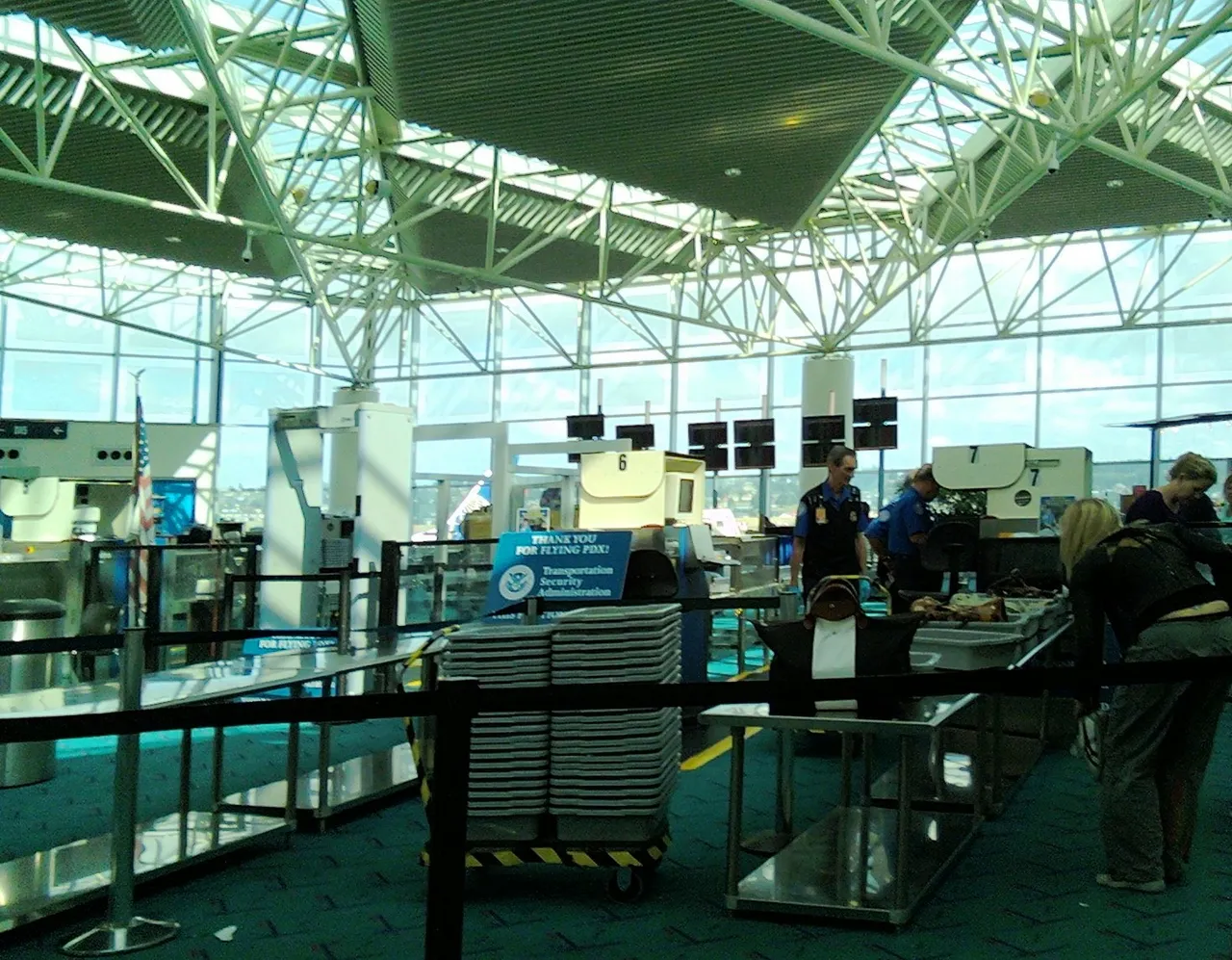
If you fly through San Francisco or Kansas City this holiday weekend, the security line will look exactly like any other — the blue uniforms, the bins, the body scanners. That sameness is the whole point.
The checkpoint looks the same — because it has to
Under the TSA's Screening Partnership Program, private contractors can staff checkpoints at participating airports, but they must follow the agency's standard procedures exactly, and the TSA audits their compliance and keeps full oversight. The screeners do the same job under the same rules; they just collect their paychecks from a company rather than the federal government, as NPR explained. Federal law even requires those contractors to pay workers at parity with comparable TSA officers, which blunts the usual cost-cutting argument.
How the opt-out came to exist
The program's roots run to September 11, 2001. Before the attacks, airlines hired the private screeners, a patchwork blamed for security failures. Congress responded by creating the TSA and federalizing screening at the nation's roughly 440 commercial airports almost overnight — but it left a compromise in the law: airports could apply to opt out and use private contractors, so long as they operated under TSA rules. The Screening Partnership Program was formalized in 2004, and San Francisco was among the first to join, expecting many big airports to follow. Most never did. Today fewer than 5 percent of commercial airports use private screeners, among them Kansas City and a scattering of smaller fields.
What the research says about cost and performance
The case for privatization has always rested on efficiency. The evidence is murky. The Government Accountability Office has studied the program repeatedly and found no reliable cost or performance edge for either model, while faulting the TSA's cost accounting as incomplete. Comparisons between private and federal airports are complicated by differences in checkpoint layout, passenger volume and traveler mix — making single-airport claims, in either direction, hard to generalize.
The Southern California picture
Los Angeles International Airport uses federal TSA screeners and has not joined the partnership program. It does run two locations under a separate arrangement, the Reimbursable Screening Services Program, in which a private party pays the TSA to provide dedicated screening — used at LAX's high-end private terminal and a premium airline facility, rather than as a broad privatization of the airport's security.
A policy push is underway
The Trump administration has moved to expand private screening in 2026, proposing in its budget to shift the smallest commercial airports — a large share of those with scheduled service — into the partnership model, projecting tens of millions in savings by reducing the federal screening workforce. The TSA has also floated a new initiative, dubbed "Gold+," that would let private partners supply their own screening equipment and technology, a step beyond the current program, where the agency owns the machines. The union representing federal screeners, the American Federation of Government Employees, opposes the expansion, warning it could erode standards and undercut a workforce that won pay raises in 2023.
What it means for travelers
For passengers, very little changes at the checkpoint. Private screeners at partnership airports follow the same rules, use the same technology and are overseen by the same agency; PreCheck and other trusted-traveler programs work identically. The one place a difference has shown up is resilience during federal funding fights: private contractors, not directly tied to federal appropriations, have kept normal operations when pay disruptions hit federally staffed airports. As the debate over expansion plays out, the line you stand in this Fourth of July will look the same — whoever signs the screener's paycheck.