

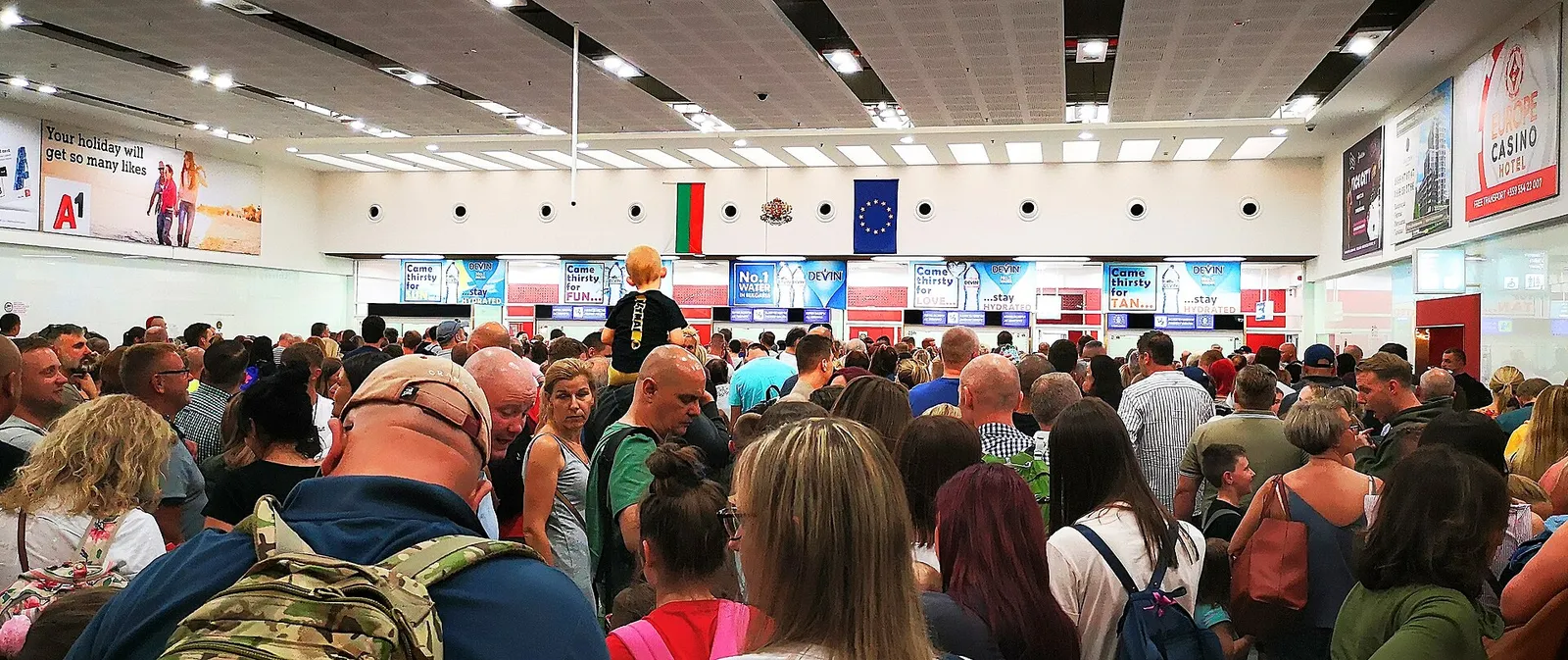
A summer trip to Europe now often begins with a longer wait. The European Union's new Entry/Exit System, or EES, which began rolling out this spring, requires travelers from outside the bloc to have their fingerprints and photograph taken at the border — and at peak times, the process is producing hours-long queues that the travel industry says are becoming untenable.
What the system does
The EES replaces the old passport stamp with a digital record for non-EU visitors entering the Schengen area, capturing biometric data on a first visit to track entries, exits and overstays, the European Commission explains. The Commission says the system strengthens security, helps detect fraudulent documents and automates enforcement of the 90-day limit on short stays — and officials note it has already flagged thousands of overstays in its early months.
The industry's alarm
The problem is time. Registering each traveler adds minutes that multiply into long lines when flights arrive in waves. In an open letter to the European Commission, airport and airline groups — including the airports body ACI Europe, the carrier group Airlines for Europe and the global airline association IATA — warned that the rollout had reached a "critical point" and was putting border staff, airports and airlines under what they called unsustainable pressure, Euronews reported. IATA and others have warned that queues could stretch to several hours at the busiest gateways during the July and August peak, as the association urged a review of the system.
Relief, and its limits
The EU built in a safety valve: during the phased rollout, member states may temporarily switch off the biometric checks to manage crowds. Airports have leaned on that flexibility to keep lines moving at peak moments, but the authority to do so is time-limited, and the industry has pressed Brussels to extend it deeper into the busy season — a request the Commission has so far only partly granted. The aviation groups say they are not asking to scrap the system, but for smarter operation: more staff, faster equipment, and the ability to ease checks automatically when queues spike.
What it means for American travelers
For U.S. visitors — who, as non-EU travelers, must complete the biometric registration — the practical advice is to build in extra time. Waits are likely to be worst at major hubs during peak hours, so arriving off-peak, allowing generous time for connections, and expecting entry to take longer than in past summers are all prudent. The checks are a one-time registration on a first post-rollout visit, so the friction should ease on later trips — cold comfort, perhaps, for anyone standing in a passport line this July.